




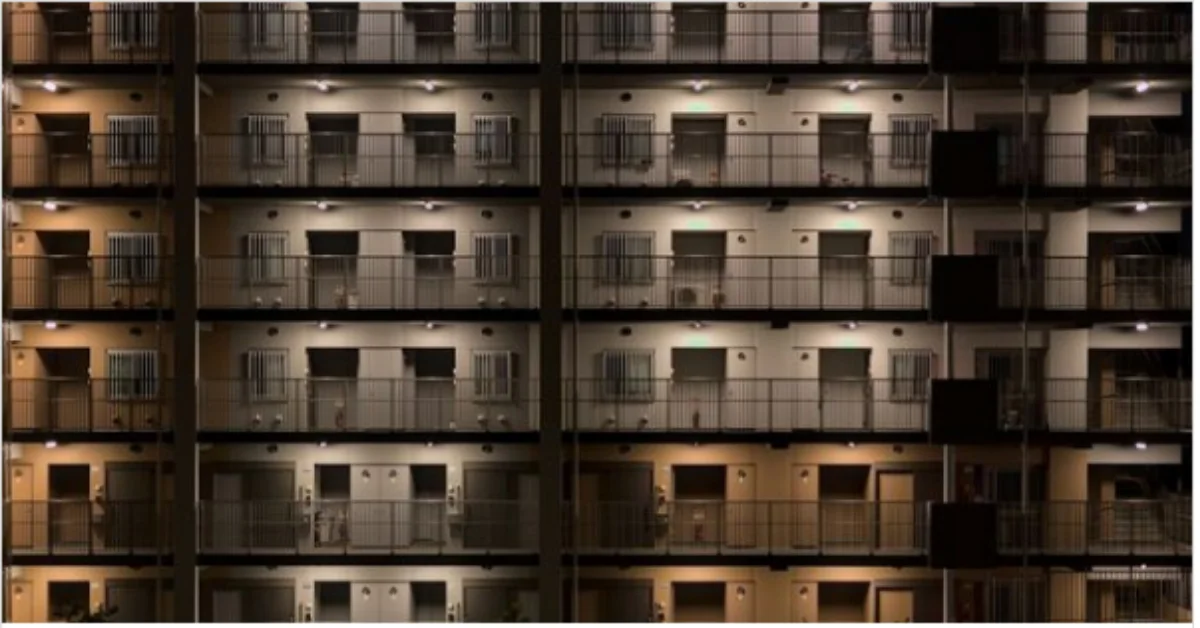
Redfern apartments built to current standards could become too hot for comfort for the equivalent of about four weeks each year by the 2050s, with new research calling for building requirements to account for future heat conditions.
Redfern Apartments Modelled for the 2050s
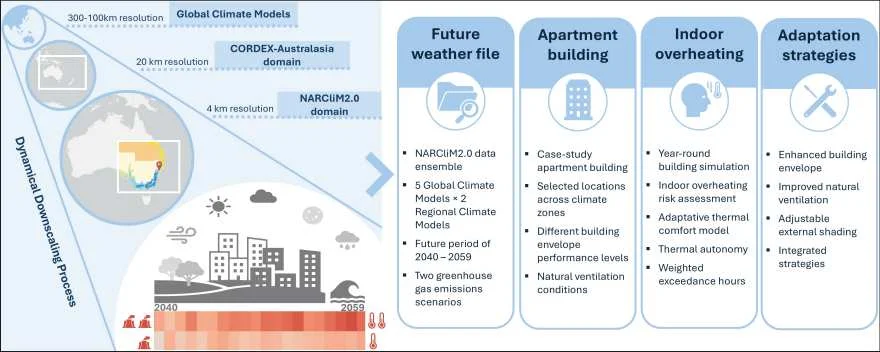
The University of Sydney-led study modelled code-compliant apartment buildings in inner-city Redfern and Penrith using high-resolution climate projections for New South Wales.
Published in Energy and Buildings, the research found that indoor overheating increased under every climate projection tested. For Redfern apartments, the equivalent of about four weeks each year could become too hot for comfort, while Penrith apartments could experience more than seven weeks.
Residents in Penrith could face almost twice the indoor overheating risk of those living in Redfern.
Under the highest-warming regional projection, median outdoor temperatures in Sydney’s hotter inland areas could be up to 5°C higher than present levels by the 2050s. During extreme heat events under the high-emissions scenario, temperatures inside modelled apartments could remain above 30°C for several consecutive days.
West-facing homes were particularly vulnerable because of low-angle afternoon sunlight. Top-floor apartments faced additional heat entering through roofs exposed to the sun.
Ventilation also affected indoor conditions. Some apartments lack cross-ventilation, while others have windows too small to remove heat that accumulates inside.
Cooling Cannot Be Assumed
Air conditioning was not considered a complete safeguard against future heat. Cooling systems are not mandatory in new apartments, some renters may be unable to install them, and electricity costs can discourage households from running them during hot weather.
Older people, low-income households, renters and people with chronic health conditions were identified as being among those most vulnerable to heat stress.
Widespread air-conditioning use during extreme heat can also increase demand on the electricity system. During a blackout, apartments could lose mechanical cooling when it is most needed.
The research argued that building standards should assess passive survivability, or the ability of a home to maintain safe indoor temperatures during extreme heat without relying on air conditioning.
Design Changes Cut Modelled Risk
The modelling found that external window shading reduced overheating by up to 32 per cent. Safe night-time ventilation, which allows accumulated heat to escape after sunset, reduced overly warm conditions by up to 34 per cent.
Lighter-coloured roofs offered further protection for top-floor apartments. When shading, night ventilation and lighter roofs were combined with insulation and double glazing, the modelled overheating risk fell by up to 94 per cent.
Additional insulation alone was not enough to protect apartments from future heat, making window exposure, roof treatment and ventilation important considerations in apartment design.
Current construction requirements assess predicted energy use for heating and cooling using historical weather data. The study recommended that new apartments be tested against a range of future climate conditions, with minimum requirements for how long homes must remain safe without air conditioning and practical guidance for meeting that benchmark.
Published 10-July-2026

