




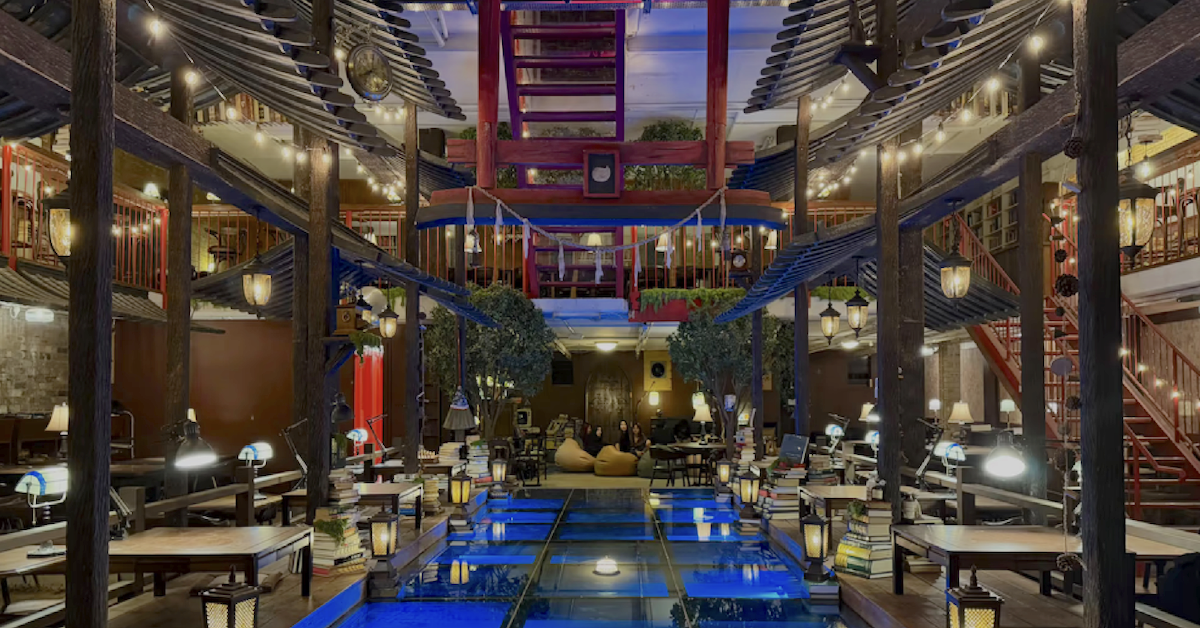
For years, the former Gould’s Book Arcade stood dark and empty on King Street, its chaotic shelves and radical history remembered by generations of Newtown locals. Now the lights are on again. Inside, students sit cross-legged beneath a Japanese-style gate, laptops open and shoes kicked off, paying by the hour for something increasingly difficult to find in the inner city: a place to simply be.
The queue outside is not for a gig, a new restaurant or one of the late-night venues more commonly associated with this end of King Street. It is for O3 Space, a study café that combines desks, couches, beanbags, food and coffee with the atmosphere of a fantasy-inspired communal lounge.
Visitors enter by downloading the O3 app and scanning through the turnstiles. Once inside, they spread across two levels furnished with antique-style sofas, communal benches and more conventional work tables, surrounded by old books and newly installed Japanese-inspired decorations.
The result is an unlikely meeting of two versions of Newtown. One belongs to the radical bookshop that filled the building with political literature, arguments and precarious towers of second-hand books; the other is shaped by smartphones, memberships, matcha and students searching for company while they study.
A queue for somewhere to sit
O3 Space can be someone’s “third space,” somewhere apart from home, university, or work where people can spend time with others without the expectations of a conventional office.
Founder Luca Yang opened the first O3 venue in Auckland in 2024 before expanding to Melbourne’s Southbank and Brunswick. The Newtown site is the company’s first Sydney location, and its opening drew queues that Yang said were comparable to those outside a nightclub.
Its popularity points to a need that extends beyond the novelty of its décor. For students living in shared houses, commuting long distances or struggling to concentrate at home, the choice is often between a crowded library, a café where lingering can feel unwelcome, or a bedroom full of distractions.
O3 Space offers another option. It’s a place where study is the expected activity, but silence is not compulsory. People can work independently, arrive with friends or take a break without having to pack up their belongings and surrender their table. The space also offers an alcohol-free evening destination in a neighbourhood famous for pubs, bars and live music.
The feeling of informality is carefully designed, but access operates through a commercial model. Visitors receive three free hours each week, after which additional time is charged at $7.50 an hour. Weekly membership options range from $10 to $50 and provide different allocations of time.
The building carries more than a famous name
Any new tenant at this address would have inherited more than an empty commercial property. For decades, Gould’s Book Arcade was one of Newtown’s most recognisable institutions and one of Sydney’s most unusual bookshops.
Bob Gould, a bookseller and prominent figure in Sydney’s radical left, established the Third World Bookshop in 1967 amid the anti-Vietnam War movement. His businesses later moved through several locations before Gould’s Book Arcade settled at the city end of King Street in the late 1980s.
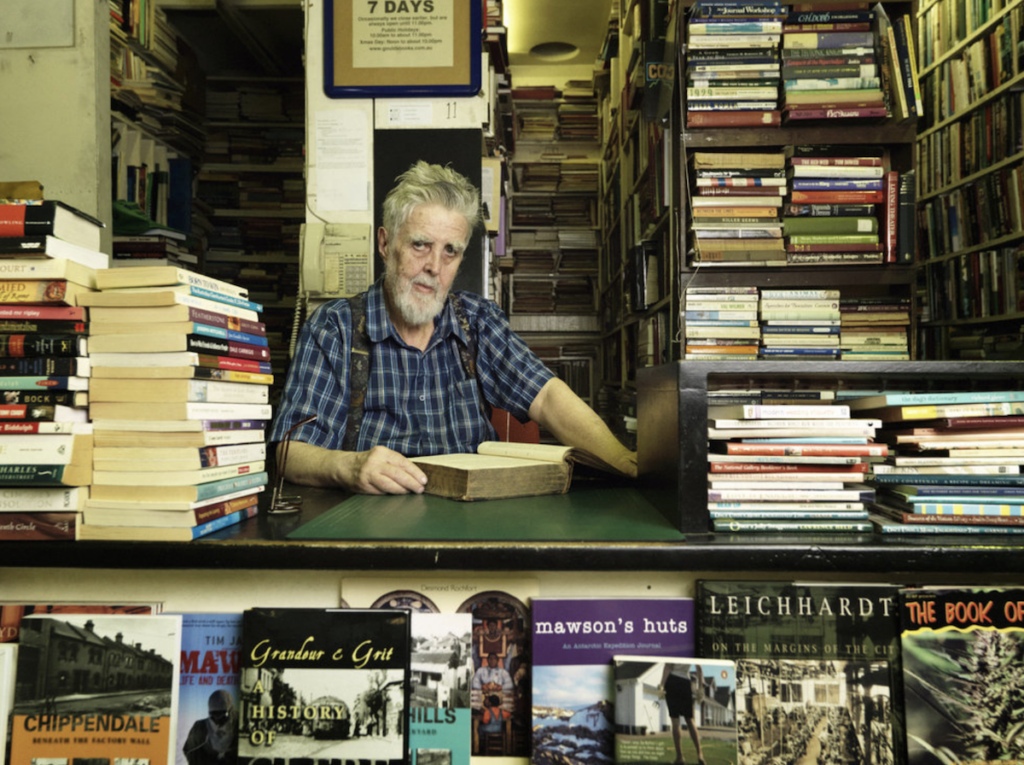
The shop became famous for the scale and disorder of its collection. Books, records, pamphlets and manuscripts filled its shelves, floors and narrow passages, creating an environment in which browsing could become an hours-long expedition. The premises also hosted meetings, readings, debates and launches, while Gould himself remained closely identified with campaigns involving refugees, war and left-wing politics. Gould died in 2011.
Former customers recall the shop not simply because of what they bought, but because of what they encountered there. Books could fall from unstable piles, conversations could turn unexpectedly political and a visit for one title could end with an armful of entirely different discoveries.
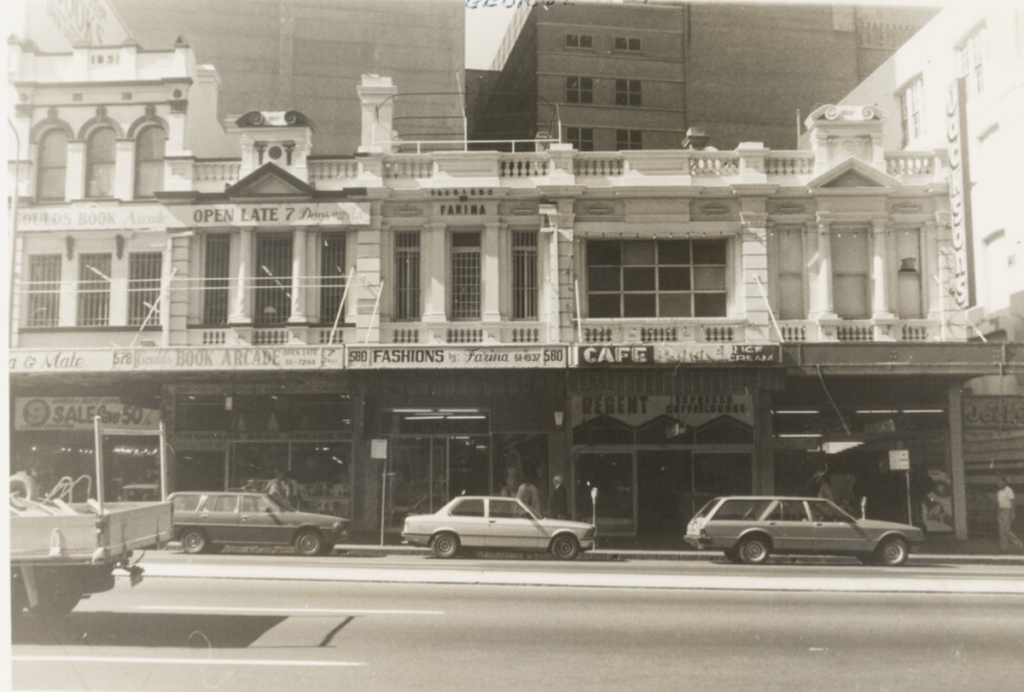
By 2017, rising commercial pressure and changes in the second-hand book trade had made the original premises unaffordable. Gould’s left the site and later reopened further south at 536 King Street, where the family-run business continues to trade.
Ten thousand books and a new fantasy world
O3’s operators have said the transformation took about five months and included sorting and cleaning approximately 10,000 books left inside the building. Rather than sending all of them to landfill, the team retained the books as part of the new interior.
Books still line walls and occupy corners, while original paintings and the historic street façade have reportedly been preserved. They now sit beside tiled roofs, softly lit lanterns and a suspended torii-style gate, producing what Yang has described as part Hogwarts and part Studio Ghibli.
Newtown’s latest changing of the guard
King Street is no stranger to reinvention. For decades, Newtown’s identity was forged in its cheap rents, independent shops, and spaces for dissent. But as rising costs push out the old guard, every new arrival faces a trial: is it a genuine evolution, or just gentrification in disguise?
The reopening of this long-closed site lands right in the middle of that debate. To skeptics, it’s local heritage is repackaged as a high-margin atmosphere for a flashier crowd. To supporters, it’s a thoughtful rebirth of a historic space, bringing hundreds of people back through a doorway that sat dark for years.
Old books, new memories
The original Gould’s was also a kind of third space, although no one needed an app to describe it that way. People went there to browse, argue, attend events, meet others and spend time among ideas they had not expected to encounter.
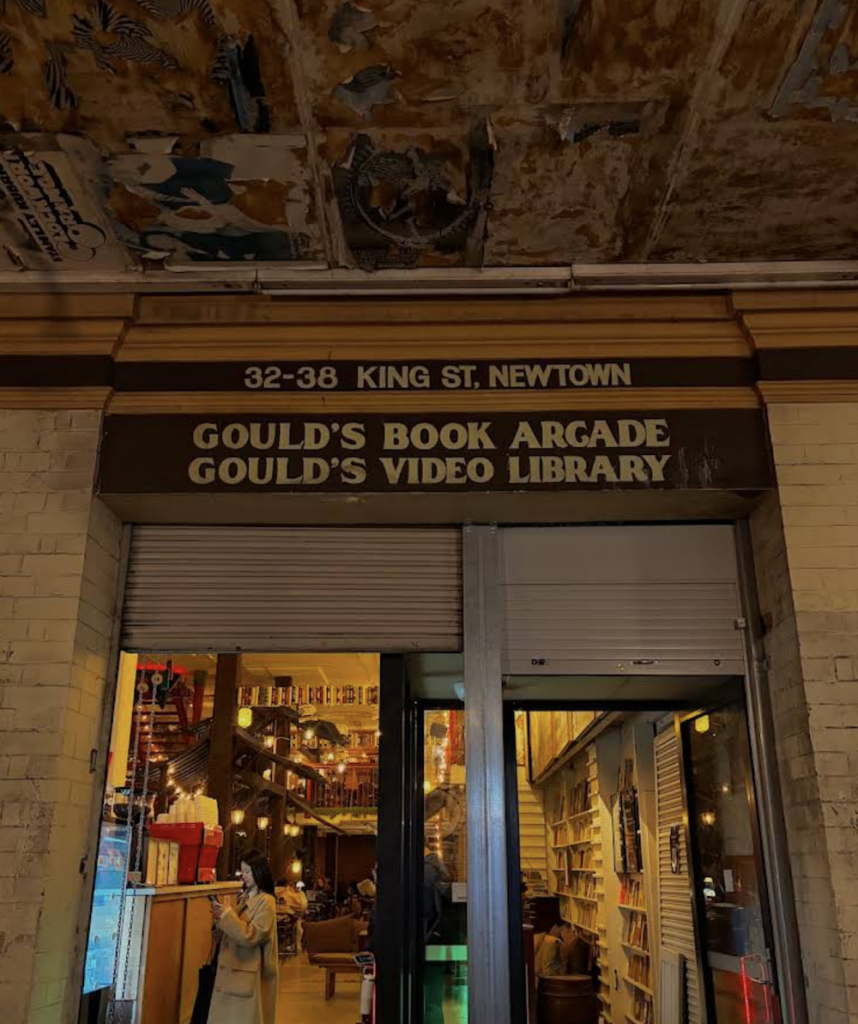
O3 Space offers a different version of that experience for a different generation. Its language is productivity rather than politics. Its organising system is digital rather than chaotic and its sense of belonging is balanced against a clock.
The most important change is visible from the street. After years of darkness, the old Gould’s building is crowded again, and a new generation is beginning to attach its own memories to the address.
Published 5-Aug-2026