
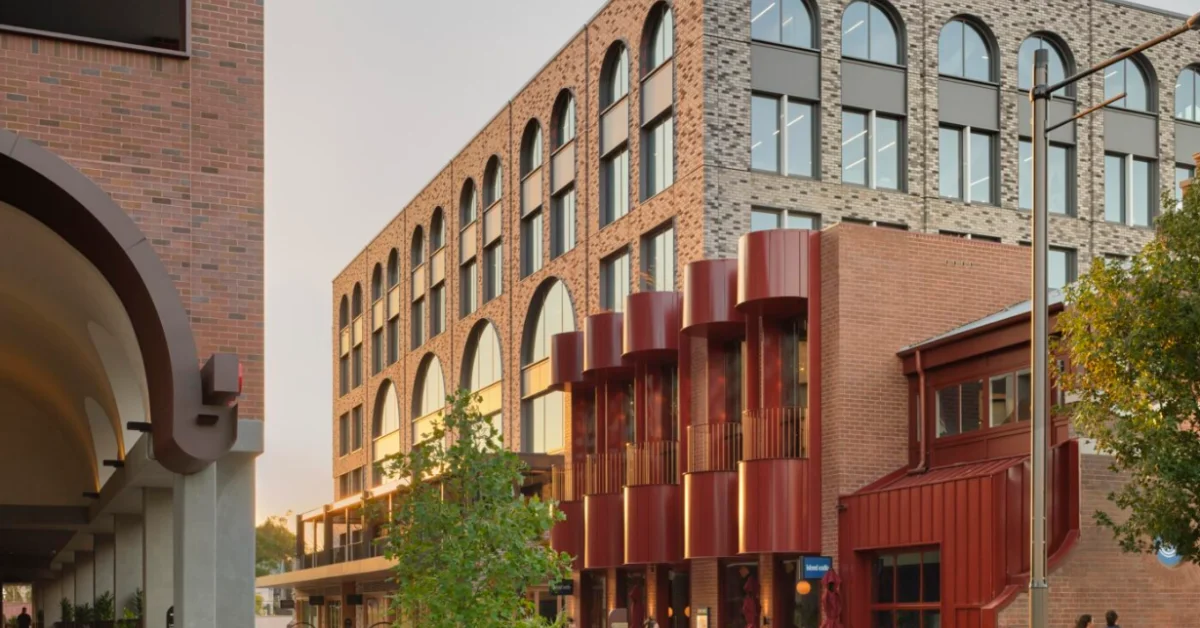
Redfern’s Surry Hills Village Named Across NSW Architecture Awards Shortlist

At the edge of Redfern and Surry Hills, a former supermarket and warehouse site has been reshaped into Surry Hills Village, a mixed-use precinct now recognised across several categories in the 2026 NSW Architecture Awards shortlist.


The Australian Institute of Architects named the project in the commercial architecture, residential architecture – multiple housing, and urban design categories. Winners are scheduled to be announced on 2 July 2026.

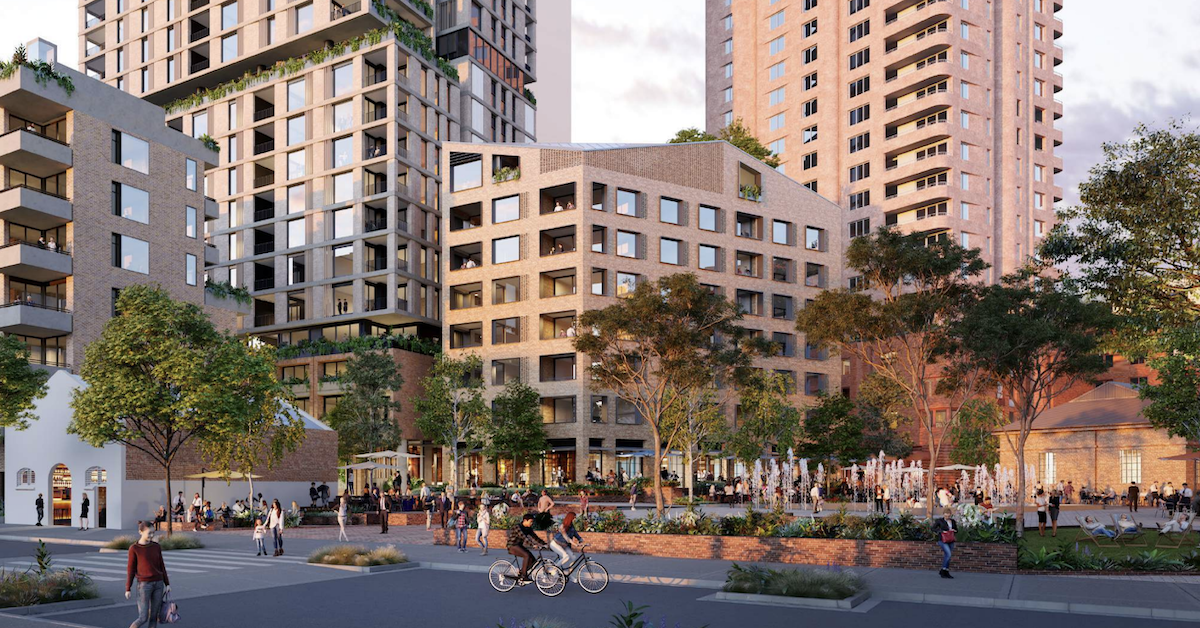
The precinct brings together housing, hospitality, retail, workspaces, heritage elements and open areas across a 12,244sqm site. Designed as seven village-style sections, it includes residential apartments, terrace houses, commercial areas, a boutique hotel, shops and laneway activity.
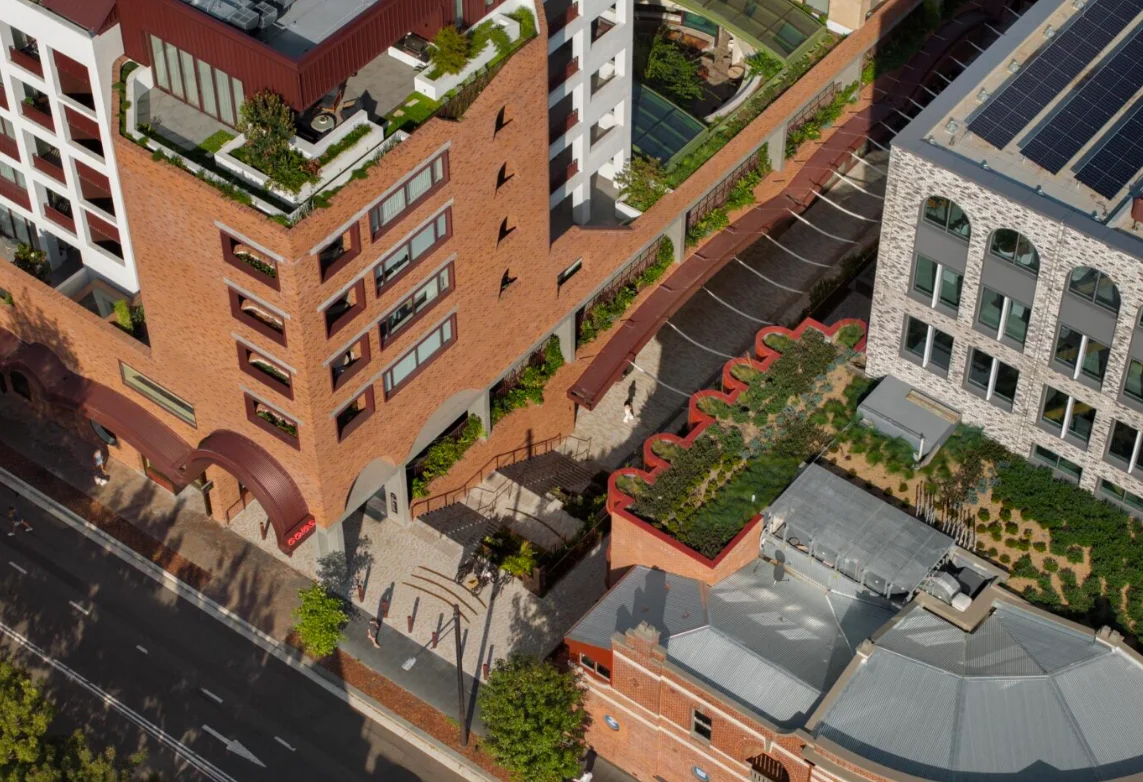
Surry Hills Village
Photo Credit: SJB

Surry Hills Village Recognition Spans Design, Housing and Street Life

The shortlist recognition reflects the broad scope of Surry Hills Village. SJB led the architectural design as principal architect, Studio Prineas worked on the heritage component, and ASPECT Studios shaped the landscape and public domain.

The residential part of the project includes four multi-residential buildings and terrace houses along Marriott Street. Brickwork, organic forms and shared green areas are used across the residential buildings, with communal spaces included for residents.

Wunderlich Lane forms a key part of the precinct layout, connecting Baptist and Marriott streets. Its food and retail offering includes Coles, Harris Farm Markets, Messina, Olympus Dining, Island Radio, Bar Julius and Saardé, along with other tenancies across the precinct.

The development also includes The EVE Hotel Sydney, a 102-room boutique hotel with a rooftop pool and bar. Hospitality spaces, retail frontages and outdoor areas are arranged around the laneway, creating a mix of uses at street level.
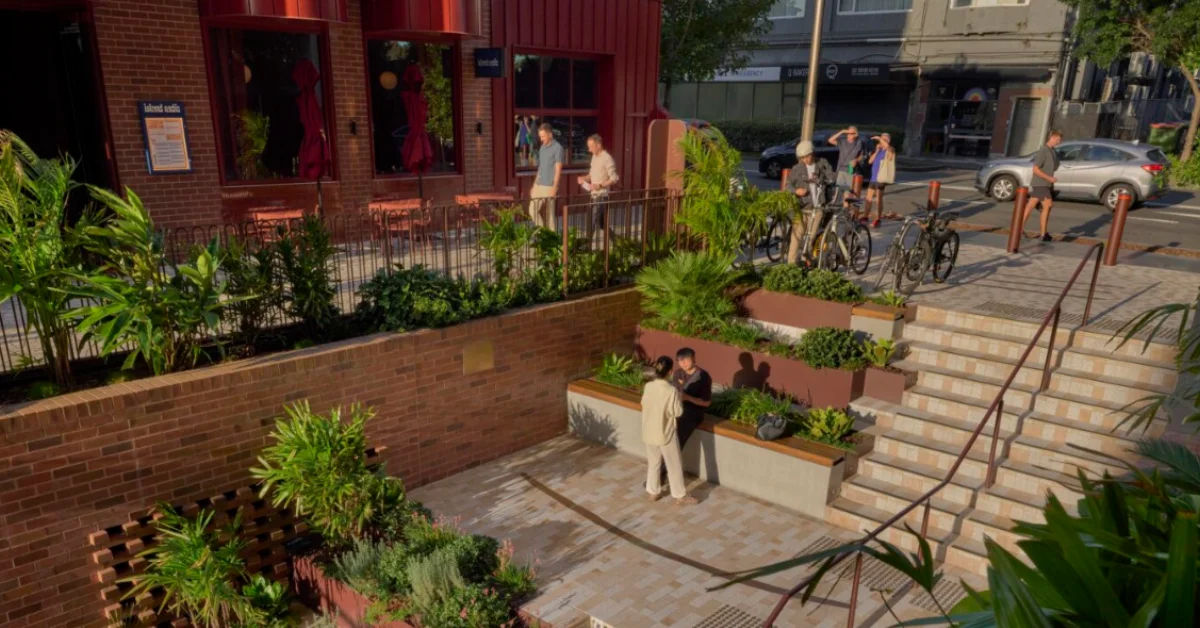
Wunderlich Lane
Photo Credit: SJB

Laneways and Landscape Reshape the Redfern site

A major part of the project is its landscape-focused design. Surry Hills Village reworks a former supermarket and warehouse site into a more open precinct, with laneways, streetscapes, public artworks, rooftop gardens and a new park included in the design.

The new laneway opens a previously enclosed site to the surrounding street network and creates more active edges through the precinct. Planting areas, seating, courtyard spaces and retail spill-out zones have been arranged to support dining, gathering and quieter moments of pause.

Greenery is carried through the development, from balconies and private planters to communal courtyards and rooftop gardens. Native plants, low-water species and permeable green areas form part of the landscape strategy, with the design also aimed at supporting urban cooling and resilience.

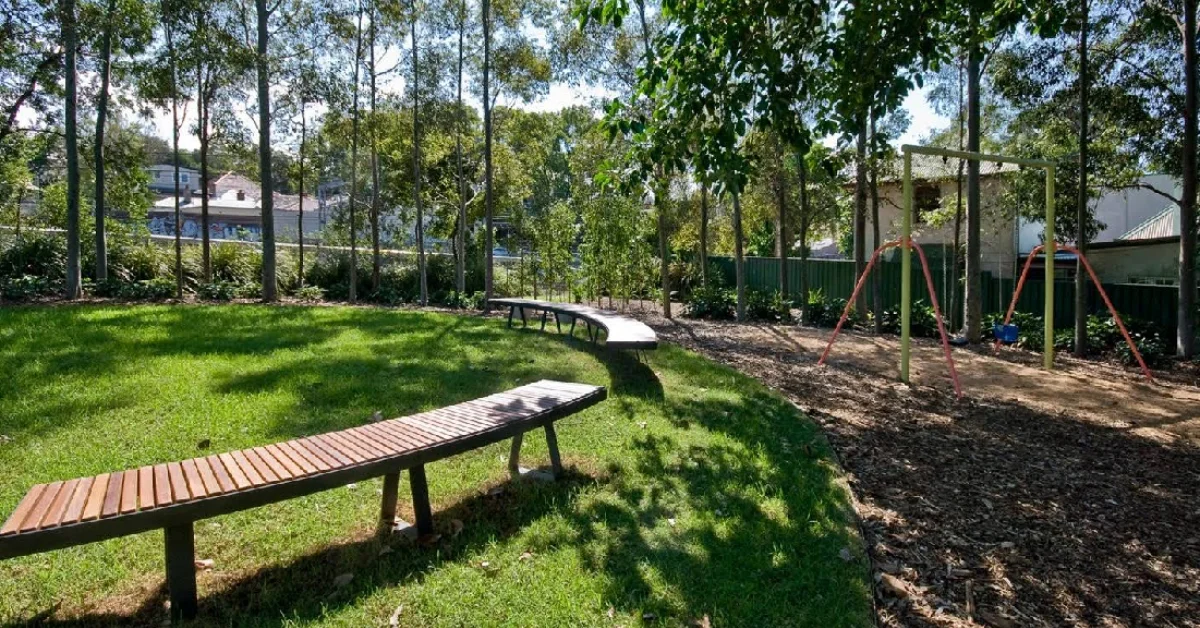
A new park has been added on a former carpark, retaining mature eucalypts while adding new street trees and a cycle link between Baptist and Cooper streets.
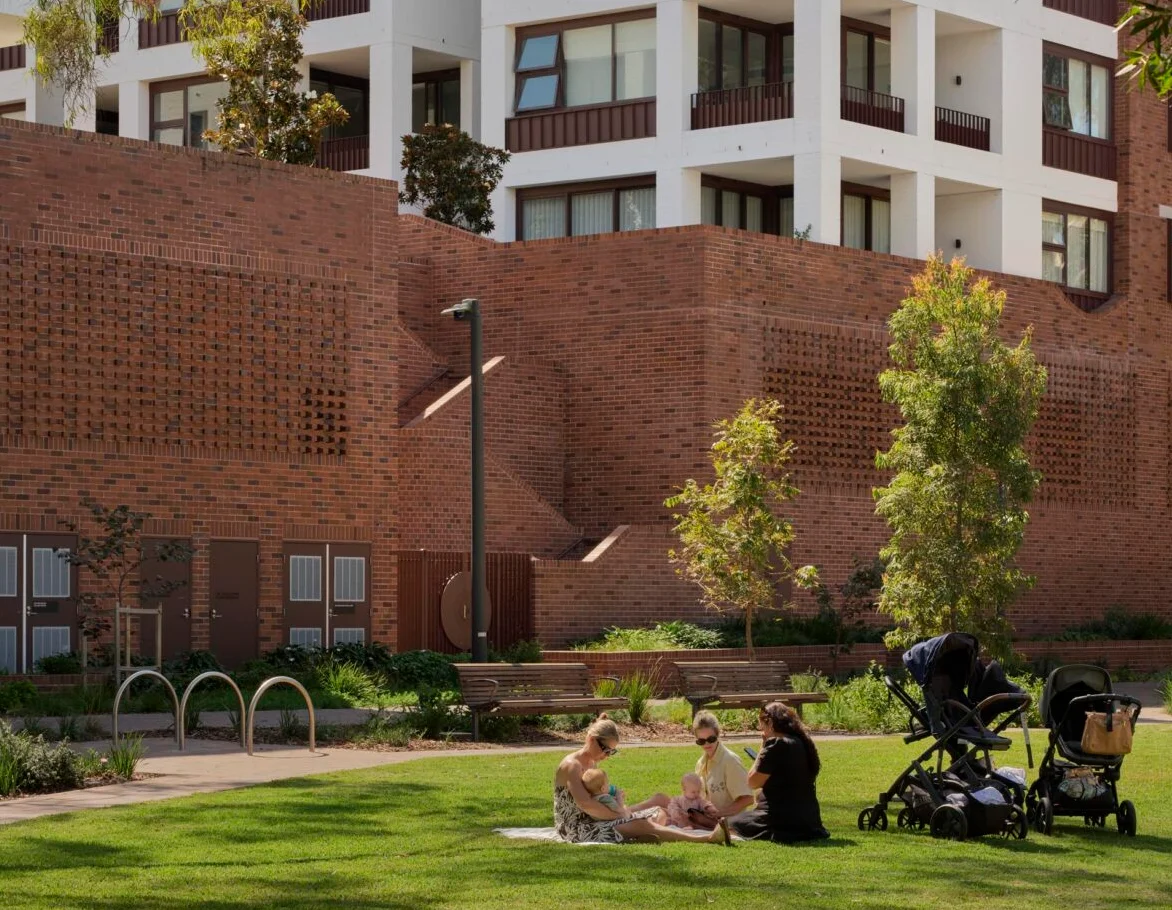
NSW Architecture Award
Photo Credit: SJB

Heritage Remains Part of Wunderlich Lane

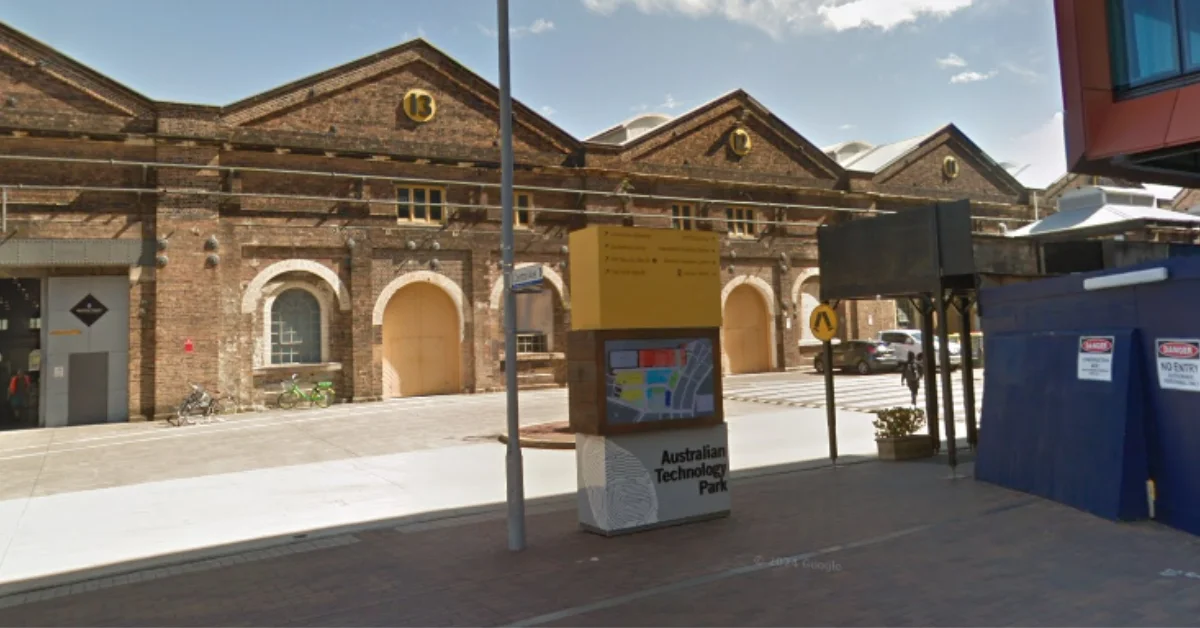
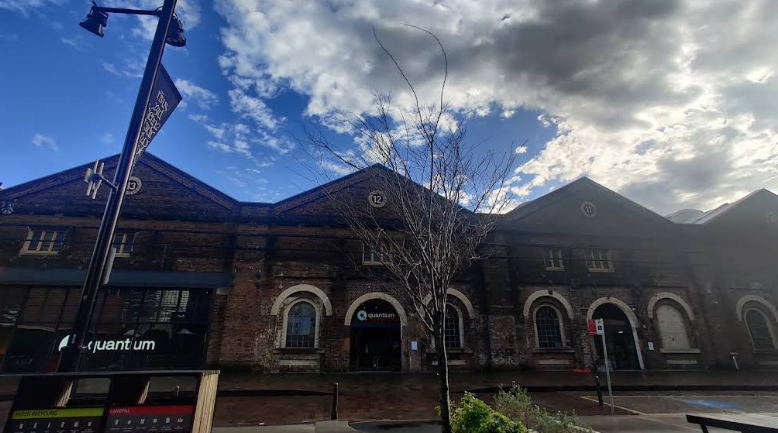
The precinct also incorporates a heritage element through the former Bank of NSW building façade at the corner of Cleveland and Baptist streets. Studio Prineas retained the Victorian-era brick façade, with food and beverage spaces now occupying the structure.

On the Cleveland and Marriott streets corner, a commercial building using mass timber construction forms another part of the precinct. Its brickwork and arched windows provide a visible marker for the development from Cleveland Street.


Together, the shortlisted entries place Surry Hills Village across several design fields, from housing and commercial architecture to urban design. The project’s recognition highlights its role as a layered inner-city precinct shaped by new residences, retained heritage, laneway retail, landscape design and shared open space.

Published 12-May-2026
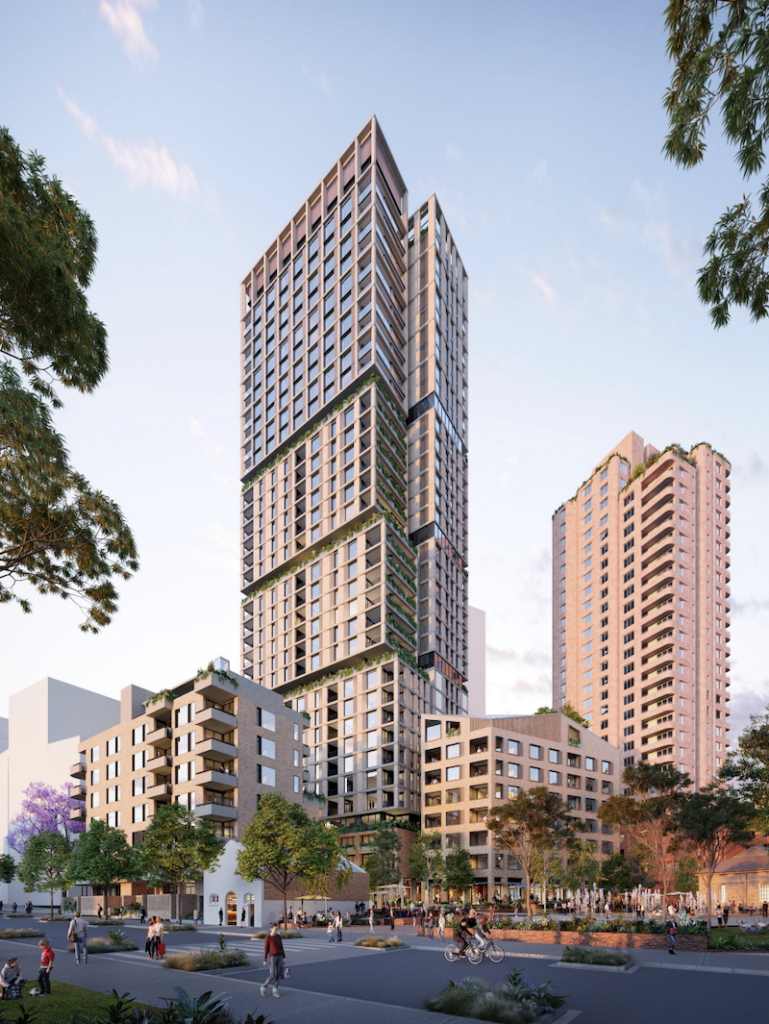
Bourke Street Site Expands to 580 Apartments Under New Plan

A previously approved development on Bourke Street in Waterloo has been pushed to a much larger scale, adding 233 more apartments and towers rising to 18 storeys higher than first planned, reshaping expectations for the former industrial site.


The revised proposal for 903–921 Bourke Street was lodged through the NSW Planning Portal. Exhibition for public comment ran from April 15 to April 28, 2026.

Approved plan expanded rather than replaced

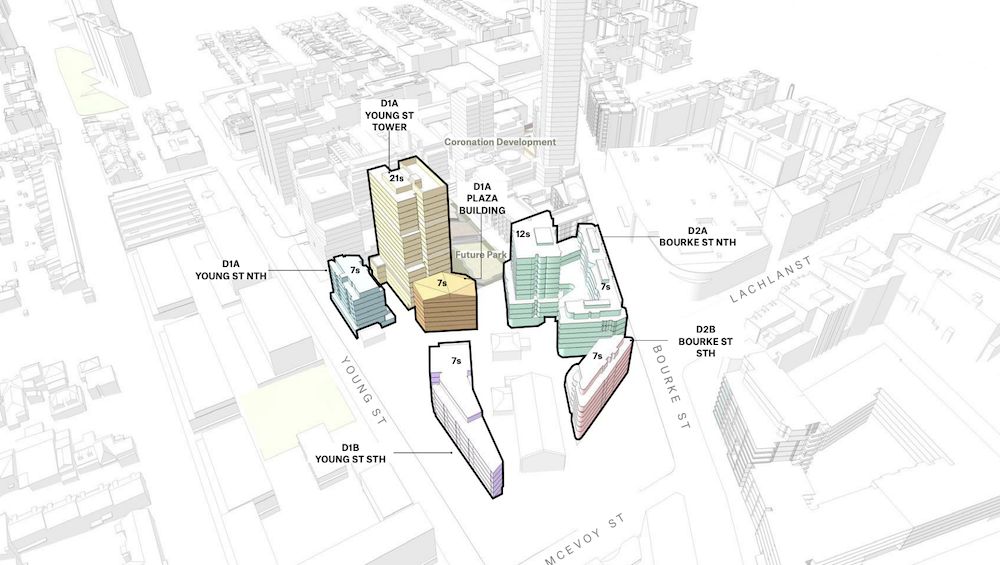
The site had already received approval years ago, under DA/2021/1415, for a mixed-use development with 347 apartments across six buildings. The new application does not replace that approval but builds on it, increasing the total number of homes to 580.

Planning documents describe the change as an “uplift” to the existing consent, with added height and internal redesign across all buildings.

Photo Credit: NSW Planning Portal

Towers rise higher along Bourke and Young streets

The most visible change is the increase in building height. One tower along Bourke Street is proposed to grow by 18 storeys, while another on Young Street would gain 16 storeys. Other buildings across the site would rise by one to four additional levels.

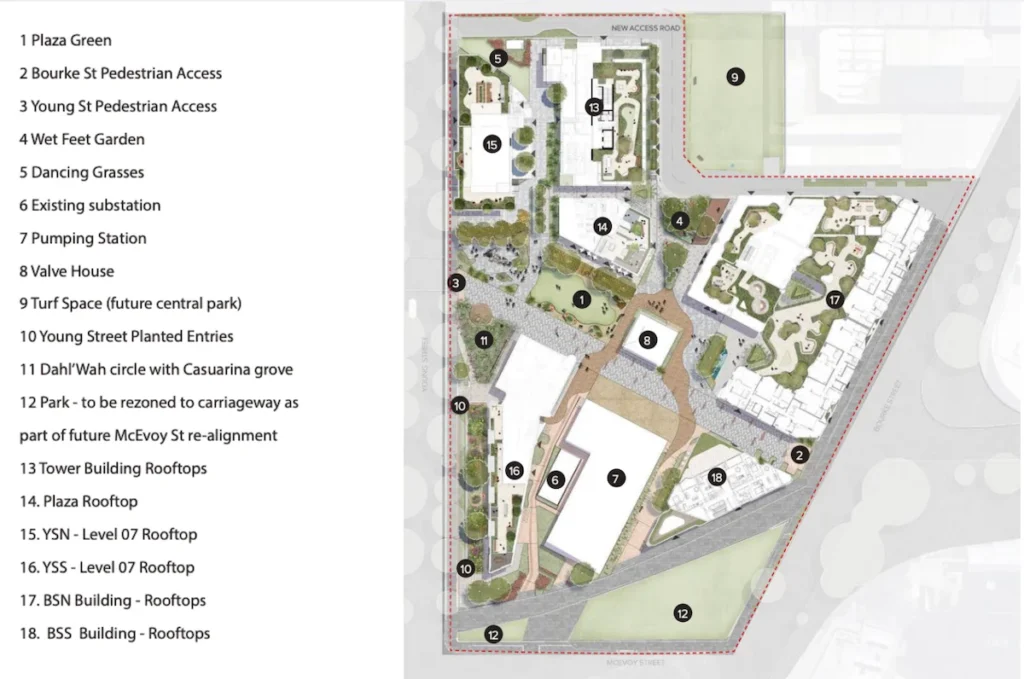
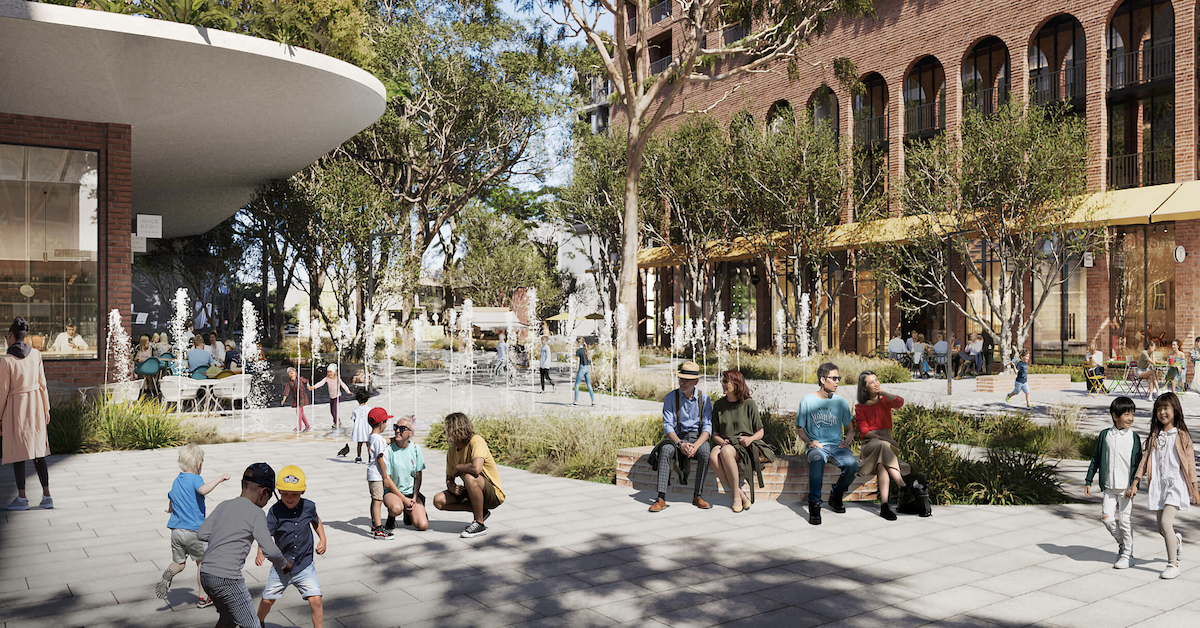
Design revisions also include changes to building shape and spacing. Some footprints have been reduced to increase separation between structures, while architectural detailing has been updated. Ground-level retail has been introduced in parts of the site, adding to its mixed-use character.

Photo Credit: NSW Planning Portal

More homes, smaller formats and shared spaces

The jump from 347 to 580 apartments includes 57 co-living studios, a format that typically offers smaller private rooms with shared living areas. The updated plans also expand communal facilities, including indoor and outdoor shared spaces and rooftop areas.

Basement layouts have been reworked to increase parking from 346 to 376 spaces. Landscape changes at ground level are described as minor but align with the revised building layout.

Photo Credit: NSW Planning Portal

Planning material notes that the proposal includes an affordable housing contribution equivalent to 12 per cent of the added uplift. The documents also outline updates to subdivision plans and agreements tied to the site’s redevelopment.


The proposal now moves into the next stage of assessment, where state planners will determine whether the expanded design proceeds in its current form or is revised further.

Published 29-April-2026

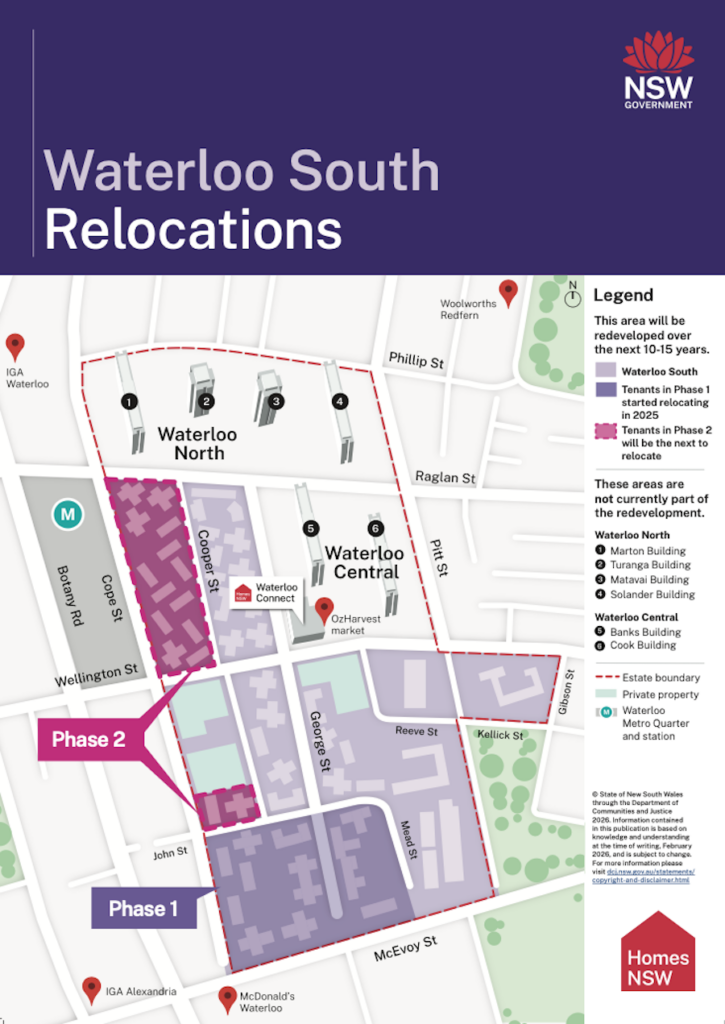
Waterloo Tenants Told to Move Before New Homes Are Built


Dozens of public housing tenants in Waterloo are now being asked to leave their homes months before any replacement housing is ready, as the redevelopment moves from planning into active relocation.


Long-term residents asked to leave familiar homes

Evelyn Morris has lived on Cooper Street in Waterloo for 27 years. Known among neighbours for her involvement as a tenant representative, she is now facing a move after receiving a six-month relocation notice. Her home sits on land earmarked for a new park, part of the wider Waterloo Renewal Project.

She is one of 99 tenants on the western side of the proposed park who have received relocation notices. Some residents, including Ms Morris, have long ties to the area and have raised questions about where they will go next.

Demolition approval signals next stage of works

In a letter sent to residents, Homes NSW confirmed that demolition has been approved for several buildings in Waterloo South, marking a key step in the redevelopment process.  

The notice outlined that buildings across John Street, Cope Street, McEvoy Street and George Street will be cleared as part of Stage 1, following consultation with the City of Sydney Council and the local community.  

Demolition is expected to begin around mid-2026 and will take place over six to nine months as part of a staged program. One property at 29 John Street will remain in use temporarily under a short-term rental arrangement until about mid-2027.  

The update did not directly address the timing of relocation, but it shows that site preparation is advancing while relocation notices are being issued in Waterloo South.

Photo Credit: NSWGovt

Relocations begin before new housing is ready

The relocation process forms part of the first stage of redevelopment in Waterloo South, the largest section of the renewal project. The plan includes new social housing, affordable housing and private dwellings, along with community facilities and open space.

However, no replacement homes for these tenants have been completed yet. Residents who wish to remain in the area may have to wait for suitable vacancies in existing public housing.

Information provided to tenants outlines the relocation process, but some residents say key questions remain unanswered, particularly about timing and access to new homes within the community.

Agencies say early moves allow time for support

Homes NSW has said relocation is starting early to give staff enough time to work with tenants and find housing that suits their needs. The agency has indicated that as many residents as possible will move into newly built homes as they become available, while others may be placed in nearby suburbs such as Redfern and Glebe.

The broader housing program also includes statewide efforts to increase supply and upgrade existing homes, with thousands of new dwellings planned across New South Wales.

Planning agreement adds to uncertainty around timing

The redevelopment is guided in part by a Voluntary Planning Agreement between Council and project partners. This agreement sets out when key infrastructure, including the new park, must be delivered.

Council has said it does not believe the agreement places immediate pressure on relocating residents for the park. As construction has not yet reached that stage, questions remain about why notices are being issued now.


Community faces disruption as plans move forward

The move raises concerns about losing connections built over the years in the area for long-time residents. Moving away, even temporarily, can mean leaving behind familiar services, neighbours and support networks.

The redevelopment is planned to deliver modern homes and improved facilities, but tenants receiving notices are still seeking clarity on where and when they will move.

More details on staging and design are expected when the Waterloo South concept plan is formally released, which may clarify how relocations and construction will align.

Published 29-April-2026

Community Advocates Obtain Report Outlining Preferred Eveleigh Bridge Design

A Transport for NSW report, released following a freedom of information request by community advocates, has identified a preferred design, location, and construction method for a pedestrian and cycling bridge over the Eveleigh railway corridor.


Read: ‘Build a Bridge’ Launched in Response to Plans for Redfern North Eveleigh Precinct


The TfNSW Optioneering Report identifies a preferred concept, location and construction method for the crossing. The preferred design, known as Option 4, would ramp from Wilson Street, Darlington, near Carriageworks, across the railway corridor, to Locomotive Street in South Eveleigh, between the large Erecting Shop and the Locomotive Workshops. 

Because ramping is not possible at the South Eveleigh end, the report proposes a combination of lifts and escalators at that side of the crossing. The report also outlines a construction and launch method that has been previously agreed with Trains NSW.

The documents were released following a Government Information Public Access (GIPA) request made by the Eveleigh Bridge Alliance (EBA). The 338-page release includes engineering feasibility studies by Arup covering a number of bridge and tunnel options, a heritage assessment by Curio Projects, and three versions of a catchment analysis by SCT Consulting. The catchment studies are based on an earlier option to the east of the Paint Shop. Costings were not included in the released documents. The full package is available on the REDWatch website.

The EBA is a coalition of REDWatch, Friends of Erskineville (FOE) and the Alexandria Residents Action Group (ARAG), formed to campaign for delivery of the bridge. The alliance has been making GIPA requests for bridge studies since 2020.

Eveleigh Bridge
Photo credit: Google Maps/Pooja Yadav

The EBA noted that TfNSW continued to assess options even after ruling a bridge out of scope during the North Eveleigh rezoning. However, TfNSW’s reports also indicate the agency does not consider projected usage high enough to justify the cost of building across an active railway corridor.


Read: Local Groups Call For Pedestrian Bridge in Proposed North Eveleigh Redevelopment


According to the EBA’s website, the railway corridor currently creates a 1.2-kilometre barrier between North and South Eveleigh, with residents needing to walk up to 46 minutes around it. A bridge was first promised by the NSW Government in 2004 as part of the Eveleigh precinct development.

The EBA has said it plans to work with surrounding institutions, businesses and potential bridge users to make the case to the government for the bridge to be delivered.

Published 27-April-2026

Erskineville Feedback Opens For Green Bans Park Upgrade Plans

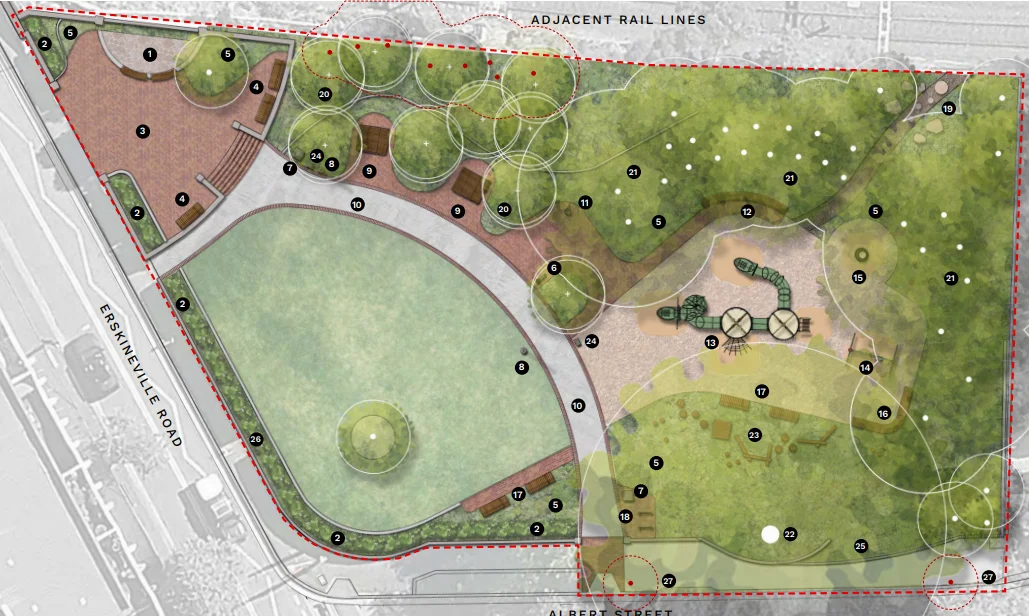
A proposed upgrade to Green Bans Park in Erskineville is now open for community feedback, with submissions accepted until 30 April 2026 and plans detailing new play areas, improved pathways, and expanded landscaping.


Community Input Shapes Erskineville Park Design

Plans to upgrade Green Bans Park have been informed by earlier feedback from local residents and groups. The concept design reflects how the space is used and outlines changes aimed at improving its layout and facilities.

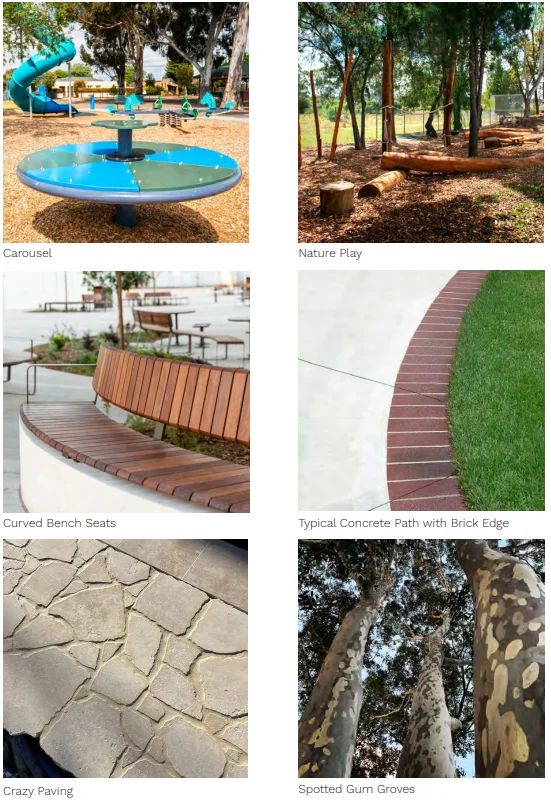
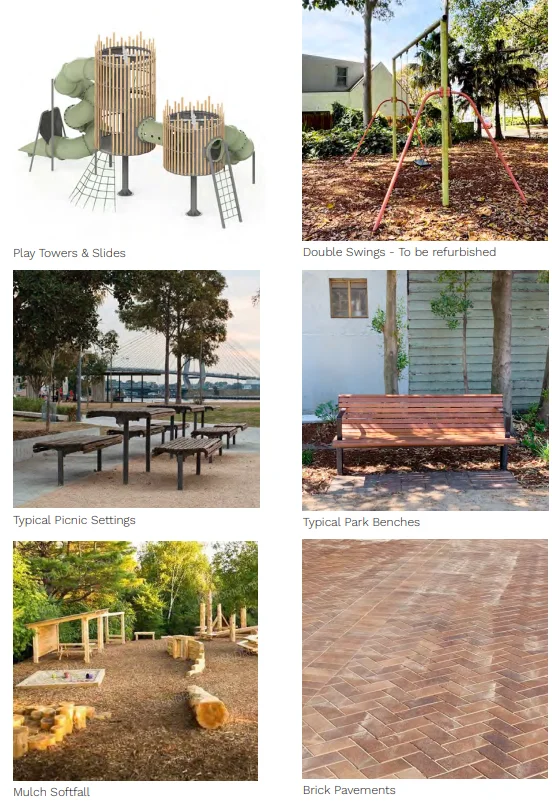
The proposal includes a refreshed playground featuring a double play tower with slides, refurbished swings, and a carousel. Nature play areas are also part of the design, adding informal play elements within landscaped sections of the park.

Additional seating and picnic settings are included, offering more spaces for visitors to gather and spend time in the park.

Green Bans Park upgrade
Photo Credit: City of Sydney

New Layout Brings Updated Features Across The Site

The concept design shows a layout that retains open grass areas while introducing new activity zones and garden spaces. Expanded planting areas and improved turf are included as part of the changes.

New pathways with brick edging are planned throughout the park, alongside a realigned footpath along Albert Street. Supporting features such as bike parking, lighting, bins, and signage are also incorporated into the design.

A nature play trail is included within the park layout, along with features such as boulder seating and garden picnic areas positioned across the site.

community feedback
Photo Credit: City of Sydney

Tree Removals And New Plantings Planned

As part of the upgrade, several trees are set to be removed due to poor health or because they are identified as weed species. Additional removals are planned along Albert Street where garden beds are affected by shading from a large fig tree listed as significant.

The proposal includes planting more trees than are removed, with new trees to be added throughout the park and along the street frontage.

Existing vegetation, including spotted gum groves and the large fig tree, will be retained.

Green Bans Park
Photo Credit: City of Sydney

Feedback Open For Erskineville Community

Residents and local groups are invited to share how they use Green Bans Park and provide input on the proposed design. Feedback is open until 30 April 2026, with options to participate online, by email at sydneyyoursay@cityofsydney.nsw.gov.au, by post, or in person.


The upgrade forms part of a broader program to improve parks over the next 10 years, with Green Bans Park now open for consultation in Erskineville.

Published 14-Apr-2026

Ann Weldon AM: The Wiradjuri Matriarch Who Shaped Redfern and Beyond

Ann Weldon AM, the Wiradjuri woman who helped build the foundations of Aboriginal rights, housing, legal aid and healthcare from the streets of Redfern, passed away on Easter Sunday aged 73, leaving behind a legacy that stretches across decades of hard-won change for Aboriginal communities in New South Wales and nationally.


Known to many simply as Aunty Ann, Weldon spent more than five decades as a driving force in the Aboriginal community, holding roles that read like a history of the self-determination movement itself. Her family announced her passing with a tribute that captured the weight of the loss: she had gone, they said, “peacefully, yet defiantly to the Heavenly Dreaming.” They described her as a woman who “bravely walked where others feared, steadfast in her belief and knowing that her ancestors would guide her.”

The loss came within days of the passing of her close friend and fellow Redfern trailblazer, Dr Naomi Mayers, the Yorta Yorta health leader and original Sapphires member who died aged 84. The two women had shared decades of friendship, purpose and struggle, and their near-simultaneous deaths have prompted an outpouring of grief across Aboriginal communities nationally.

From Erambie Mission to the Heart of Redfern

Ann Weldon, nee Coe, was born in 1953 in Cowra and raised on Erambie Mission on Wiradjuri Country, on the banks of the Kalare, or Lachlan, River. Three years after the 1967 Referendum, inspired by the momentum of the Yes campaign and the Aboriginal rights movement taking shape in Sydney’s inner city, she moved to Redfern. She and her husband, Wiradjuri man George Weldon, settled in the area, buying a family home in nearby Dulwich Hill in the mid-1970s and cementing themselves in the Redfern community that would define much of her life’s work.

Aunty Ann Weldon
Photo Credit: Yvonne Weldon/Facebook

The timing of her arrival was significant. Redfern in the early 1970s was alive with activist energy, as Aboriginal people from across the country gathered in the suburb and began building the institutions their communities had been denied. Weldon did not stand on the margins of that movement; she was at its centre.

A Builder of Institutions, Not Just a Protester

Weldon stood apart for the breadth and lasting impact of her work. She helped found the NSW Aboriginal Children’s Service and the Inner West Aboriginal Community Company, and she actively supported the establishment of the Aboriginal Medical Service in Redfern, one of the first Aboriginal Community Controlled Health Services in the country.

A central figure in the creation of the NSW Aboriginal Legal Service, Weldon served for years as company secretary before becoming its first female CEO. Her leadership continued as the inaugural CEO of Aboriginal Land Rights NSW, a role that laid the groundwork for land rights across the state, according to her daughter, City of Sydney representative Yvonne Weldon.

“She travelled across New South Wales, met with Elders on Country, and worked with them to map out the regions and local land councils,” Representative Weldon said.

Weldon also served as the longest-running full-time Chairperson of the NSW Aboriginal Housing Office Board and held multiple positions on the ATSIC Regional body. She was a long-serving Aboriginal Liaison Officer with the Public Service Association and was pivotal to the creation of the PSA’s Aboriginal representative body, the first of its kind in the Australian union movement.

Representative Weldon said that right up until her final days, people continued to seek her mother’s counsel. Her mother’s wisdom, she noted, was something people came back to again and again.

Honoured, but Never Finished

The recognition that came to Weldon in her later years reflected the scale of what she had given. She was named the 2020 Dreamtime Elder of the Year at the National NAIDOC Awards, and in 2025 she received the Order of Australia for her dedication and significant service to the Aboriginal community, specifically for her contributions to housing, disability support and the union movement.

“I feel humble, I think it’s wonderful to be given that recognition,” she said when the honour was announced.

Organisations across Redfern and beyond paid tribute following her death. The NSW Aboriginal Land representative body acknowledged her “lifelong contributions to the fight for basic human rights and justice for Aboriginal people” and said her legacy would continue as a source of strength. Wyanga Aboriginal Aged Care described her passing as “a profound and heavy loss for community.” The Redfern All Blacks rugby league club called her “a Blak matriarch of Redfern community” whose “strength, leadership and unwavering commitment” had left a mark that would never fade.

Her family’s tribute summed it up: “We are heartbroken, yet heart-strengthened, that our beautiful Ann Pauline, Mum and Nin has left us. But we know her impact, her love, and her spirit will never leave.”

Ann Weldon AM is survived by her family and great-grandchildren.


Published 10-April-2026

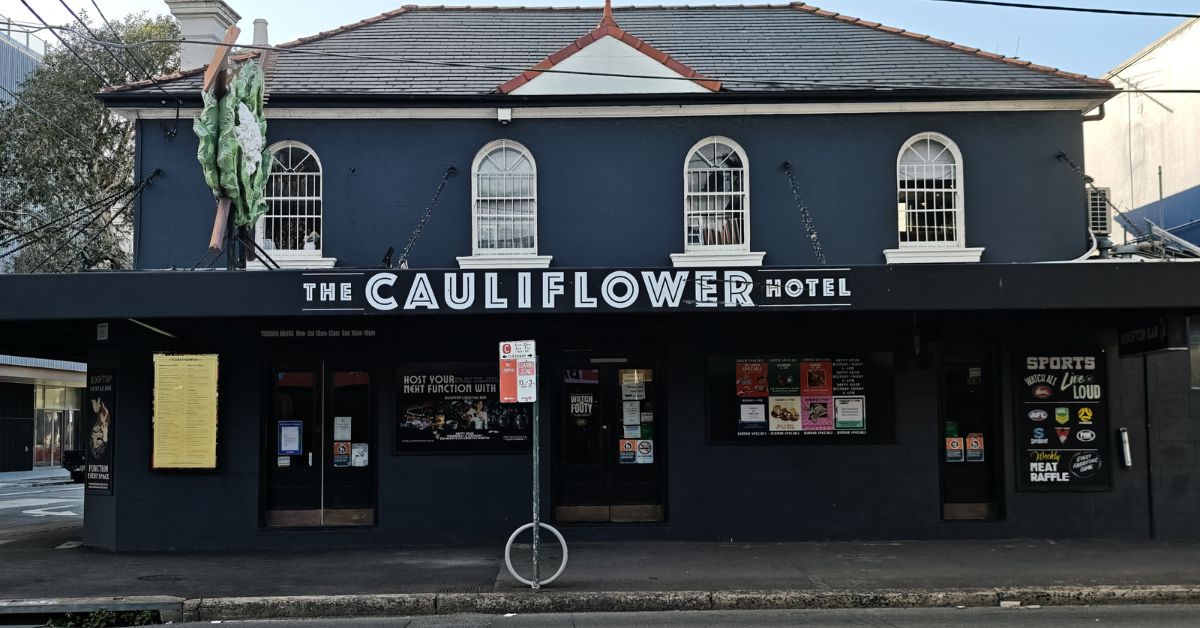
The Cauliflower Hotel: Nearly 200 Years on Botany Road and Still Pouring

A large fibreglass cauliflower sits atop a pub on Botany Road in Waterloo, so familiar that many locals barely register it. Beneath it, the Cauliflower Hotel at 123 Botany Road stands as one of Sydney’s oldest and most recognisable pubs — heritage-listed, still thriving, and with origins that trace back to a market gardener, a bumper crop and a well-timed decision about how to invest the proceeds.


For Redfern and Waterloo residents, the Cauli is simply part of the landscape, the way that the best neighbourhood pubs always are. But the story behind how it got its name and its giant vegetable is worth knowing.

How a Cauliflower Built a Pub

George Rolfe opened the Cauliflower Hotel on what is today the south-east corner of Botany Road and Wellington Street in 1838. He was 39 when he opened the pub, and for many years prior had successfully worked as a market gardener in the area. Rolfe, who arrived from England to Sydney as a 16-year-old boy with his family, acquired large tracts of land on the Waterloo Estate and was said to have made enough money to build his pub from the sale of a bumper crop of cauliflower.

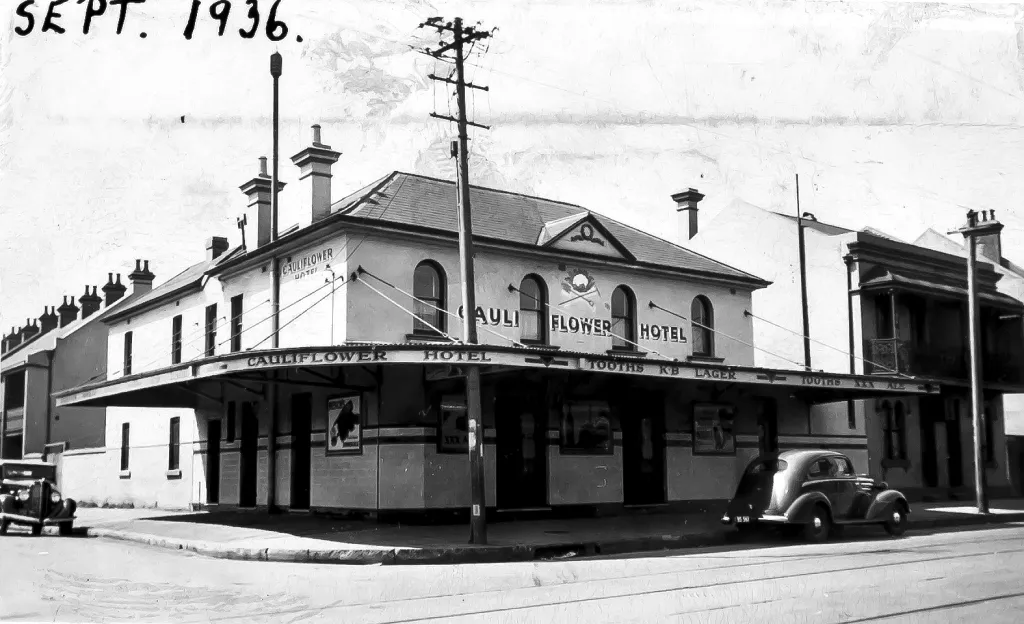
The Cauliflower Hotel in 1936
Photo Credit: Australian National University, Noel Butlin Archives.

The name stuck, and so did the sign. The venue still features its eye-catching cauliflower and crossed rake sign, a direct reminder of those market gardening origins. That sign, along with the big fibreglass cauliflower mounted on the roofline above, makes the Cauli one of the most immediately recognisable pub facades in inner Sydney.

George and his wife Mary ran the two-storey pub together, and after Mary’s death in 1897, George continued as licensee until his own death at the age of 79 in 1900. At that point he had been licensee of the Cauliflower for 38 years, making him the oldest and longest-running hotel host in Sydney at the time of his death. The only other licensee who had run a single pub for longer in Sydney was Emanuel Neich of the Bath Arms Hotel in Burwood, who died in 1893 after 62 years in the trade.

The hotel was one of four public houses trading on Wellington Street, Waterloo at that time, alongside the Australian Arms, the Duke of Wellington and the Rose of Denmark. Of those four, only the Cauli is still standing and still serving.

What the Pub Is Today

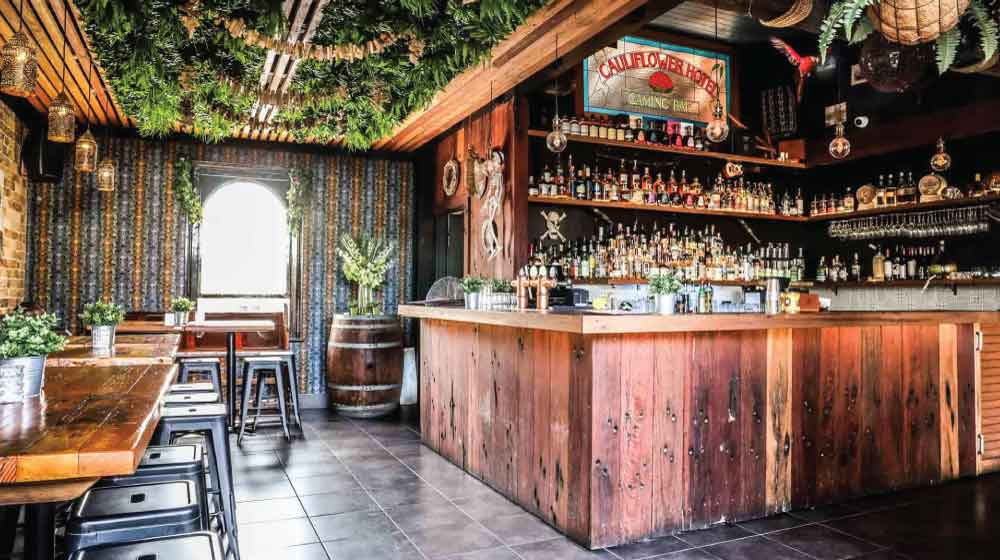
The heritage-listed site has sat on Botany Road since 1838, and while its modest exterior has remained largely unchanged across nearly two centuries, the interior is very much a modern pub. The Cauli runs across multiple spaces, from the main bar to a sports bar with 18 screens, TAB and Rabbitohs memorabilia, to the upstairs Forgotten Cask, a rooftop rum cocktail bar with palms, a grass ceiling and a menu that leans into the Caribbean theme with jerk chicken and barramundi tacos.

Photo Credit: The Cauliflower Hotel

Regular programming includes trivia nights, live music, a resident DJ and a full calendar of seasonal and sporting events from Melbourne Cup to AFL and NFL finals. The bistro covers pub classics alongside a broader menu that has evolved considerably from the old-man pub era, with craft beers on tap sitting alongside traditional commercial pours and a cocktail list that makes the Forgotten Cask worth a trip in its own right.

Opening hours run Monday to Tuesday 10am to 11pm, Wednesday to Saturday 10am to midnight, and Sunday 10am to 10pm.

Still the Local, After All These Years

The defining strength of the Cauliflower Hotel lies in the way the venue has continued to evolve without losing sight of its purpose. It has modernised where necessary, retained what matters, and remained a place where patrons can watch live sport, attend performances, host functions or visit midweek and feel a sense of familiarity and belonging.

For Redfern and Waterloo residents living through one of the most rapid phases of urban change this part of Sydney has ever seen, new apartment towers, the Metro, and Waterloo Estate redevelopment, the Cauli stands at its corner on Botany Road exactly where it always has. Nearly 200 years from a market gardener’s good fortune. Still open, still worth it.

The Cauliflower Hotel is located at 123 Botany Road, Waterloo. More information on events and bookings is available at their site and through VenueNow.


Published 30-March-2026

Waterloo Station Wins Gold at World Architecture News Awards as Sydney Metro Earns Global Design Recognition

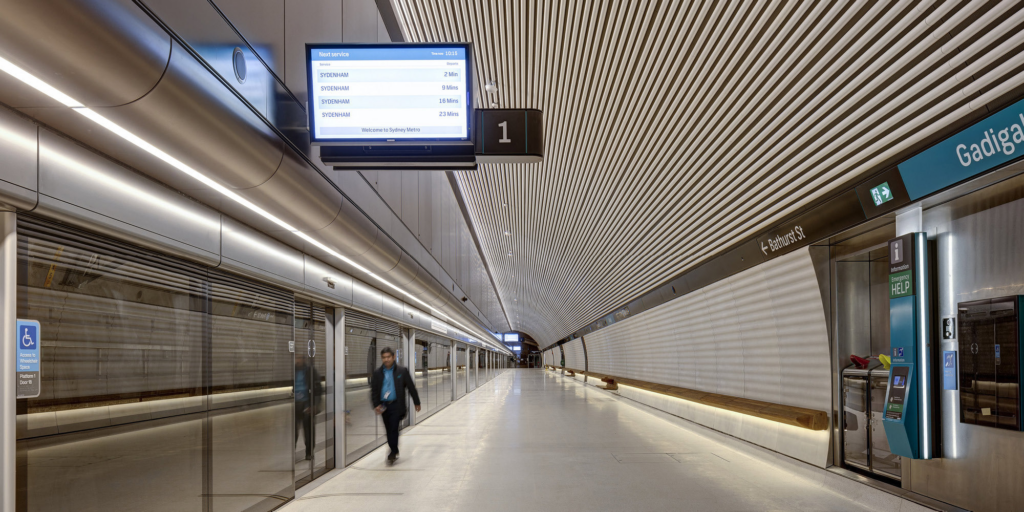
Waterloo Station, the new Sydney Metro underground station designed by John McAslan + Partners in collaboration with Woods Bagot at the heart of the Waterloo Metro Quarter, has taken home Gold in the Transport category at the 2026 World Architecture News Awards, sharing the top honour with fellow Sydney Metro station Gadigal, designed by Foster + Partners in collaboration with COX Architecture.


The double Gold result places both stations among the most internationally recognised pieces of public infrastructure built in Australia in decades and confirms the Sydney Metro City and Southwest project as one of the world’s benchmark achievements in transit-focused urban design. For Redfern and Waterloo residents, the award recognition brings renewed attention to a station that sits at the front door of one of Sydney’s most significant urban renewal corridors.

What Makes Waterloo Station Stand Out

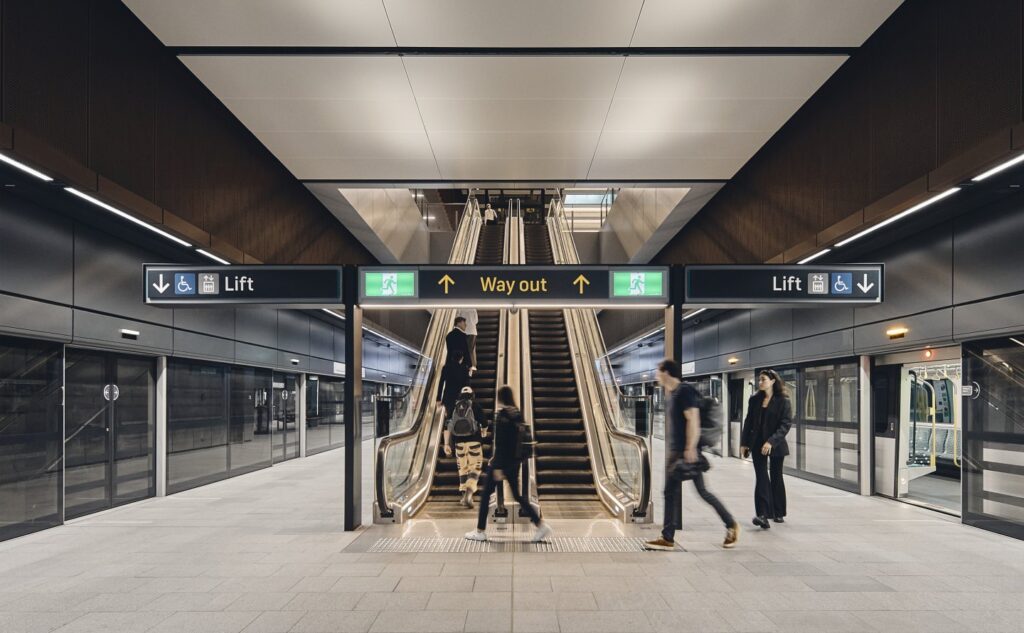
Waterloo Station occupies an entire city block at the centre of the Waterloo Metro Quarter, a position that reflects its intended role as far more than a transit node. The station design positions people at the centre of the transport experience, creating a welcoming hub in a series of highly legible below-ground spaces naturally lit by a network of skylights and intuitive to navigate for all.

Waterloo station
Photo Credit: John McAslan + Partners

The design encompasses sandstone from Waterloo itself, with a nuanced material palette dominated by hues drawn from the surrounding area. That grounding in local materiality gives the station a genuine sense of place rather than the generic finish that large infrastructure projects often default to. Three wall-mounted sculptures at Waterloo, collectively titled “Footprints on Gadigal Nura,” were developed by Indigenous artist Nicole Monks with the continuing Custodians and Aboriginal community who have connection to the land, weaving the area’s deep history directly into the fabric of the building rather than treating cultural acknowledgement as an afterthought.

The WAN Awards judges described Waterloo as a high-quality project with a strong integration of art, clear navigation and a restrained design sensibility, a combination that reflects the deliberate design philosophy spearheaded by John McAslan + Partners and Woods Bagot from the project’s inception.

Gadigal’s Growing List of Accolades

Gadigal Station, designed by Foster + Partners in collaboration with COX Architecture, has been building a formidable international profile since the Sydney Metro City line opened in August 2024. In 2025, the station was named one of the world’s most beautiful passenger stations by the Prix Versailles awards, a global program celebrating excellence in architectural and commercial design. That same year, it was included among a select group dubbed the “Magnificent Seven” most beautiful stations worldwide. The 2026 WAN Gold award adds further international weight to a station that has quickly become one of the most discussed pieces of contemporary architecture in Australia.

Photo Credit: Foster + Partners

Gadigal Station takes its name from sitting on Gadigal land, and its design has been widely praised for its integration of public art and acknowledgement of the Traditional Custodians of the Country on which it stands.

A Metro Line Built Around Design Excellence

The two Gold awards at the WAN are not isolated outcomes but reflections of a design ambition that ran across the entire Sydney Metro City and Southwest project from the outset. The Sydney Metro represents Australia’s largest infrastructure project, totalling $21.6 billion, and connects Sydney’s northwest, west, southwest and greater west regions through a network of fully accessible stations. Each station on the City line was assigned to an architectural practice with significant international credentials, producing a line where every station carries a distinct design identity while maintaining coherent operational legibility across the network.

The City and Southwest line runs from Chatswood to Sydenham through central Sydney and connects to the Metro North West line, which opened in 2019. Waterloo Station serves as the southern anchor of the inner-city section, connecting one of Sydney’s fastest-growing renewal precincts directly to the CBD in a journey time that fundamentally changes the accessibility of the neighbourhood.

Why This Matters to Redfern and Waterloo

For Redfern and Waterloo, a community with a complex and layered history that stretches from nineteenth-century industry through social housing, Indigenous urban community life and more recent creative and technology sector growth, a globally recognised station at the front of the neighbourhood carries significance well beyond the commuter convenience.

The station sits at the heart of the Waterloo Metro Quarter and acts as a catalyst for further regeneration, with an over-station development currently under construction marking the next phase of the comprehensive urban scheme. That development will introduce residential, retail and commercial uses directly above the station entry, extending the precinct’s transformation into the blocks surrounding the station over the coming years.

The WAN Gold award confirms what the station’s daily users have already experienced: that Waterloo Station is not simply a place to catch a train. It is a piece of architecture that takes the history, culture and identity of its neighbourhood seriously, and builds those qualities into the spaces that hundreds of thousands of people move through every week.

Further information about the Sydney Metro network is available at sydneymetro.info.


Published 27-March-2026.

Redfern Woman’s Dog Killed After Cyclist Hit-and-Run on Moore Park Shared Path

A Redfern woman’s chihuahua has died after a cyclist struck her on a shared path in Moore Park’s Centennial Parklands last Tuesday evening and rode away without stopping, leaving the owner devastated and reigniting debate about safety on shared pedestrian and cycling paths.


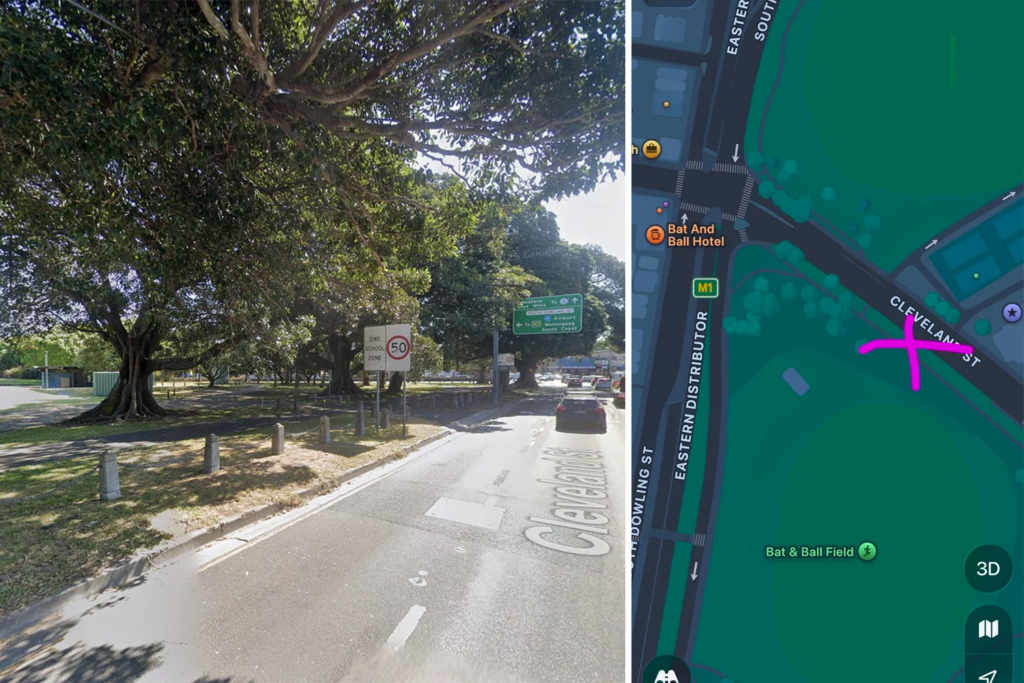
Megan Waterhouse, 36, was walking her chihuahua Spider on a lead along a shared path next to the Bat and Ball Field in Centennial Parklands at around 6.40pm when a cyclist came from behind and rode directly over the small dog. Waterhouse did not see the cyclist slow down or stop. She watched the bike wobble but the rider was gone by the time she looked up.

When she picked Spider up, the injured dog bit her hand in distress. The bite became infected, requiring Waterhouse to later undergo surgery. She rushed Spider to a local vet, where the chihuahua went into cardiac arrest. Vets were able to revive her, but Spider had sustained brain damage and was euthanised.

Waterhouse described Spider as her little angel girl, a dog she said brought a smile to the face of everyone she passed and who went everywhere with her. The loss, compounded by the cyclist’s failure to stop or acknowledge what had happened, has left her shaken about the safety of shared paths she has used regularly.

A Hit-and-Run on a Shared Path

Police confirmed they are investigating after being notified that an unknown cyclist collided with a dog on a shared path in Centennial Parklands before leaving the scene. The cyclist is described as a caucasian male wearing white Lycra and riding a high-end white road bicycle. One witness has already come forward and independently provided a description consistent with what Waterhouse saw.

The speed limit within Centennial Parklands is 30km/h. Greater Sydney Parklands confirmed it was not notified of the incident and declined to comment further given the matter is now before police.

Megan with her dog
Photo Credit: Megan Waterhouse

Waterhouse said the experience had reinforced concerns she already held about shared paths. She described being yelled at by cyclists and bowled over on paths on multiple prior occasions, and said the incident felt like a nightmare extension of an already difficult situation for pedestrians sharing paths with faster-moving cyclists.

Shared Path Safety Back in Focus

The incident has drawn renewed attention to long-running concerns about the design and management of shared paths between pedestrians and cyclists in urban parks. Pedestrian Council chief executive Harold Scruby describes such paths as a fundamental problem, arguing that footpaths are for pedestrians and that people should be able to walk through a park and feel safe.

Photo Credit: Google Maps

Scruby also pointed to a structural issue that this case illustrates clearly. Cyclists carry no registration plates and, in many cases, no compulsory third-party insurance. When a collision occurs and the rider leaves the scene, tracing them is difficult and the injured party has limited recourse. He noted that cyclists are aware they can leave without consequence because their identity is concealed by a helmet and sunglasses.

The issue of shared path management in Centennial Parklands is not new. The park draws a large volume of cycling traffic, particularly among road cyclists using its internal loop, while also serving as a daily walking destination for residents from Surry Hills, Moore Park, Redfern and the surrounding suburbs. The intersection of fast road cycling with pedestrian and dog-walking activity on the same paths has generated incidents and complaints over many years.

A Confronting Reminder

For residents of Surry Hills and Moore Park who use Centennial Parklands regularly, Spider’s death is a confronting reminder of a risk that most people accept as background noise on shared paths but rarely see result in tragedy. Dogs on leads, children, older pedestrians and joggers all share the same asphalt with cyclists travelling at speeds that leave little margin for error, particularly when a small dog on a short lead is effectively invisible until a rider is almost upon her.

The absence of the cyclist from the scene is the element that has most affected Waterhouse and drawn the strongest community reaction. Whatever the circumstances of the collision, leaving the scene of an incident that kills an animal and injures the animal’s owner crosses a line that the community has responded to clearly.

Anyone with information, dashcam footage or witnesses to the incident are urged to contact Surry Hills Police Station or Crime Stoppers on 1800 333 000.


Published 18-March-2026.

Petrol Price in Lewisham Nears $3 a Litre

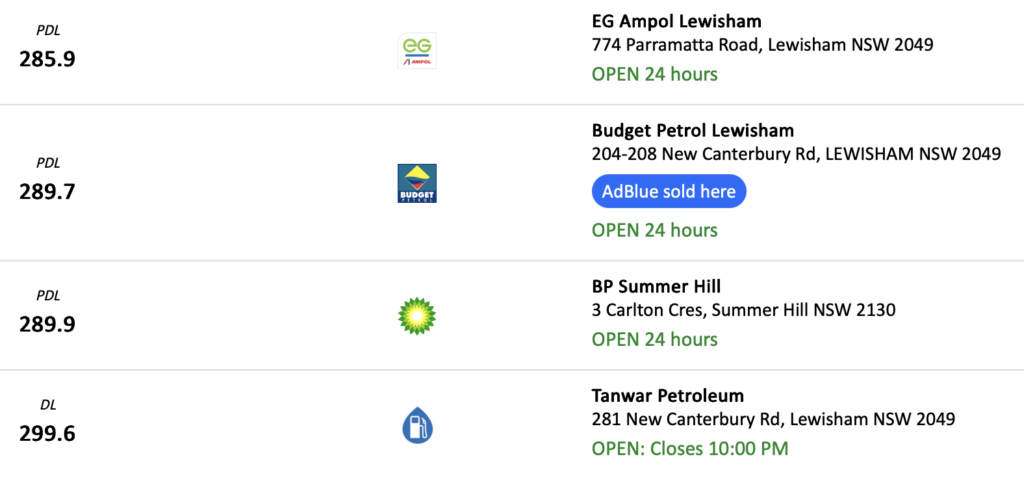
A short drive from Redfern, a Lewisham service station is charging close to $3 a litre (299.6 cents/litre) for petrol, reflecting the broader rise in fuel prices across Sydney.


The family-run station in Lewisham has seen prices climb while customer demand drops. The business, once known for lower prices, is now selling some fuel below cost as sales fall from around 20,000 litres a day to about 2,000 litres.

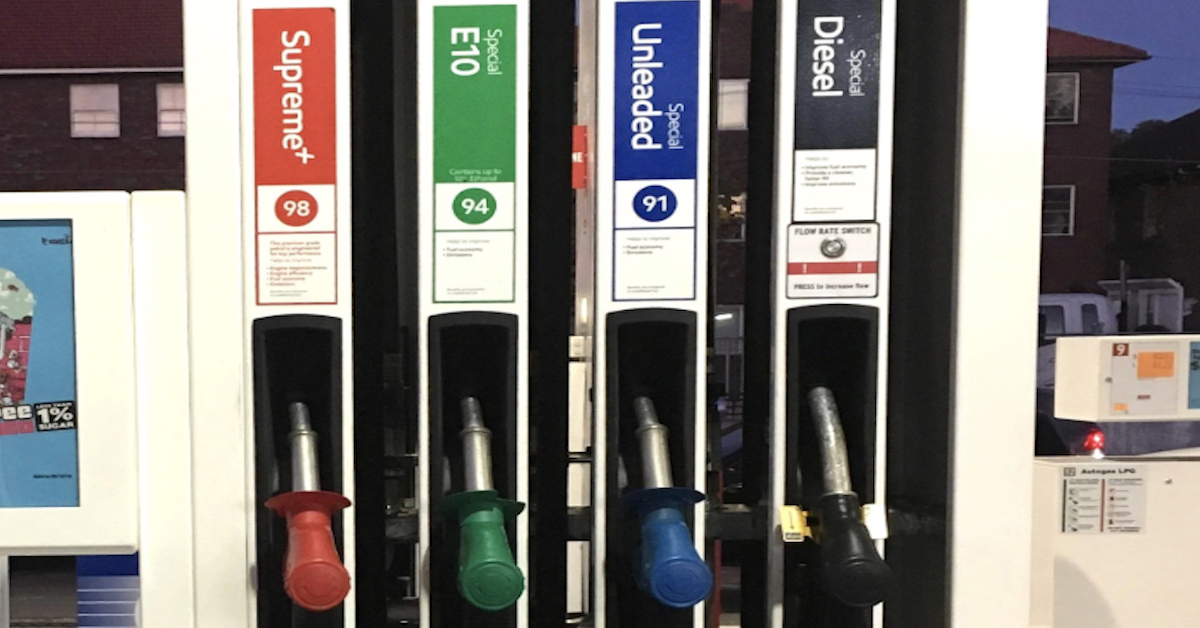
Photo Credit: Fuel Check

Fuel pressure close to Redfern

The situation in Lewisham reflects broader fuel pressure across Sydney. It also shows that the strain seen across Australia is now visible close to Redfern, where rising costs are becoming harder to ignore.

Transport workers are already feeling the impact. A Sydney taxi driver saw weekly fuel costs rise by about $250 within a month, reducing earnings. The same kind of pressure may affect other workers who rely on driving for income.

At the same time, more commuters are adjusting how they travel. Reports cited an average increase of more than 47,000 daily trips on trains and metro services in recent weeks.

Global pressures behind local prices

The rise in Sydney fuel prices is linked to wider global supply issues. Panic buying in parts of Australia has led to some stations running out of fuel, especially in regional areas, adding pressure to supply chains.

Photo Credit: Informed Sources

These supply concerns are tied to disruptions in key oil shipping routes, including the Strait of Hormuz, which carries a large share of the world’s fuel supply. 

Figures from the Australian Competition and Consumer Commission fuel monitoring update show petrol and diesel prices in Sydney rose sharply in early March, with the city recording the highest diesel prices among major capitals at one stage.

Small stations squeezed by rising costs

Independent service stations are particularly exposed during price spikes. Many smaller operators buy fuel at daily market rates, leaving them vulnerable to sudden increases in wholesale costs.

This means higher prices at the pump do not always reflect higher profits. In the Lewisham case, some fuel types were sold below purchase cost even as overall sales declined.

At the national level, the federal government has said fuel supply remains stable, while urging motorists not to panic-buy. Emergency fuel reserves have been partially released to support supply, although distribution delays may continue to affect availability.


Published 20-March-2026