




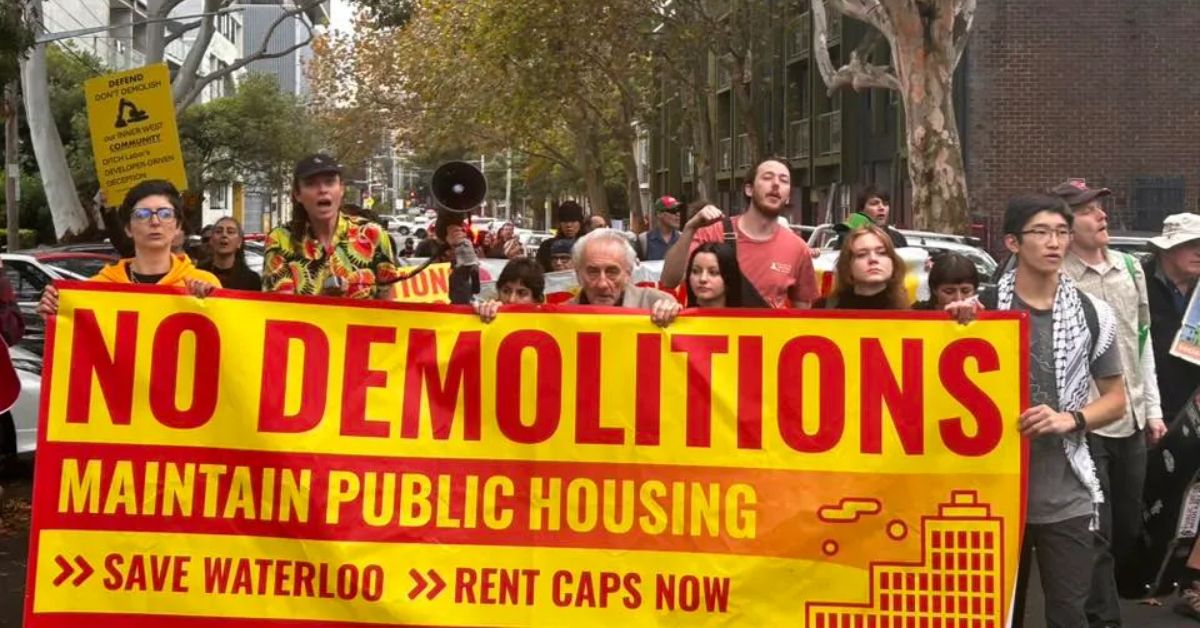
Demolition fencing works around occupied apartment blocks in Waterloo South have triggered a community blockade, temporarily halting construction activity and prompting a parliamentary motion calling for a suspension of the works.
The standoff escalated after residents across the estate received formal relocation and demolition notices earlier this month. Demolition crews arrived on site on 25 May, when 15 tenants were still living in the buildings earmarked for demolition, according to advocacy group Action for Public Housing.
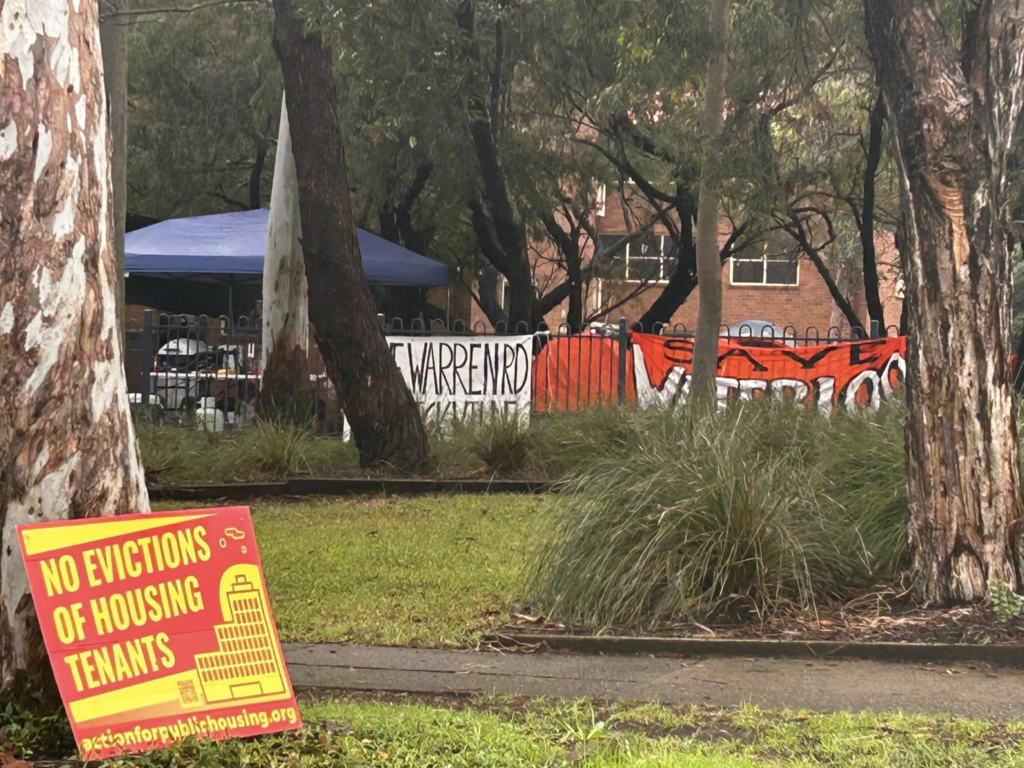
The night before, around 200 residents and supporters gathered for an overnight occupation, carrying signs reading “Housing is a human right” and “Stop demolishing public housing.” On 25 May, the blockade prevented contractors from installing fencing that residents said would have cut off access to their backyards and car parks.
The Sydney branch of the Maritime Union of Australia later announced its support for the occupation.
Blockade restricts contractor access
A crowd of residents and supporters established an overnight occupation at the site ahead of the contractors’ arrival. On Monday 25 May, the blockade successfully prevented crews from installing perimeter fencing. Residents stated the proposed fencing layout would cut remaining tenants off from shared backyards and parking spaces.
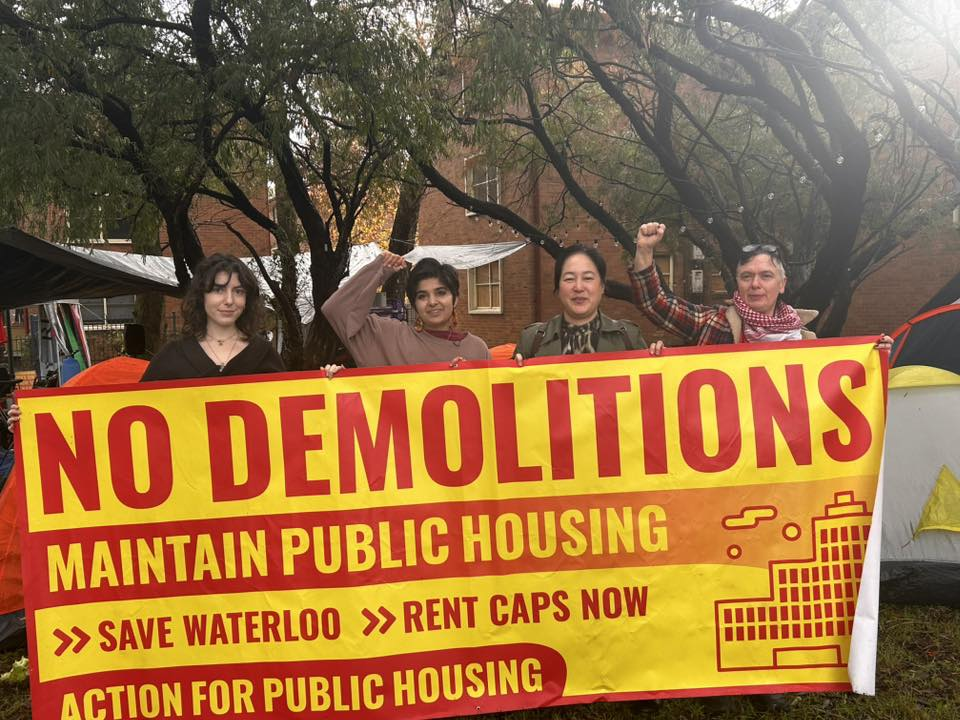
The Maritime Union of Australia’s Sydney branch subsequently issued a statement confirming its support for the resident occupation.
For long-term residents watching machinery and contractors arrive at neighbouring buildings, the situation has created significant uncertainty. A spokesperson for the resident advocacy group said the demolition notices were issued while multiple tenants were still waiting to be allocated alternative housing.
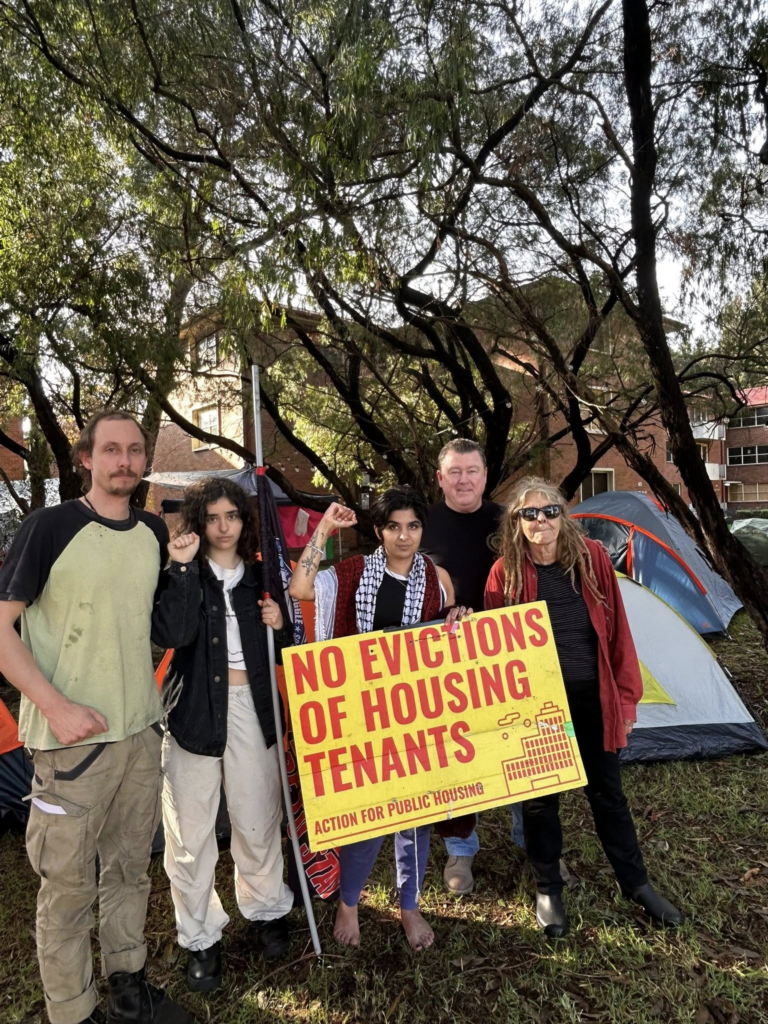
“The buildings around me are already getting fenced off for demolishing,” said one resident, describing a worsening impact on his health. “I got even more anxious about the whole situation. My dose of antidepressants and insulin and so on are growing up. So basically my anxiety is becoming very, very serious.”
Relocation strategy and parliamentary debate
The official position of Homes NSW, as outlined in earlier correspondence sent to estate residents, is that the relocation process commences early to give housing staff sufficient time to work individually with tenants to secure appropriate alternative accommodations.
The agency has stated its objective is to house as many eligible residents as possible in newly constructed dwellings as they become available, with properties in neighbouring suburbs such as Redfern and Glebe also being utilized for placement.
The dispute entered parliament via a motion brought to the NSW Legislative Assembly by Ms Jenny Leong. The motion called for an immediate halt to all current demolition activities on the site.
A key point of contention raised in the motion regarded a breakfast radio interview broadcast on the morning the crews arrived, during which it was claimed that the targeted buildings were already entirely vacant. Community advocates and residents heavily dispute that claim, maintaining that 15 tenants remain in their homes.
Project scope and future staging
The works form the initial stage of the Waterloo Renewal Project, a long-term redevelopment of one of Australia’s largest public housing estates. State planning blueprints indicate the project covers land bounded by John, Cope, McEvoy, and Mead streets.
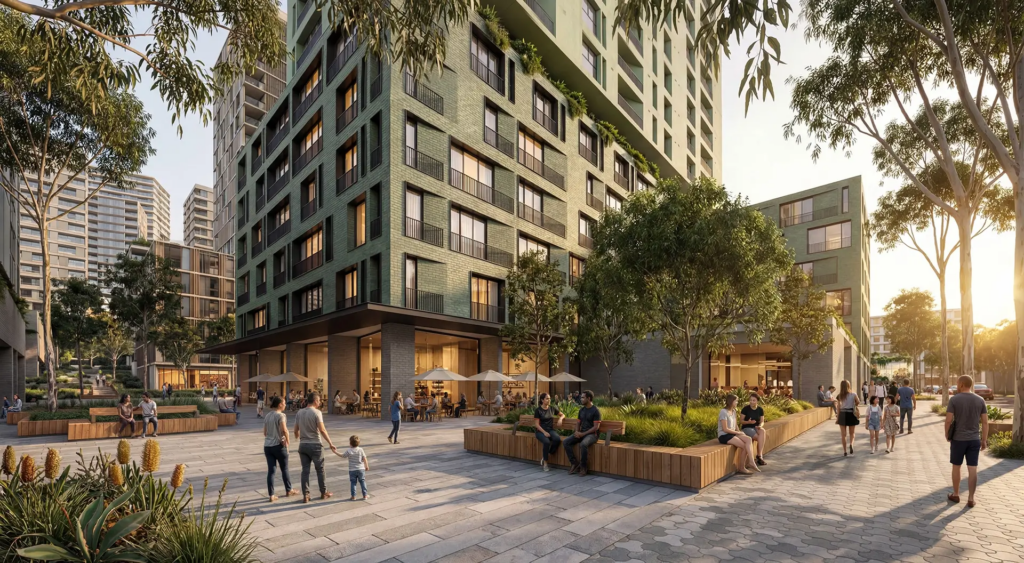
The current master plan outlines the construction of approximately 3,000 new dwellings, shifting the site from entirely public housing to a mixed-tenure model comprising 30 per cent social housing, 20 per cent affordable housing, and 50 per cent private residential dwellings.
The first phase of the project targets more than 130 low-rise units for demolition, with further structures scheduled for clearance within the next 12 to 15 months. Project documentation estimates the full delivery of the redevelopment will take between 10 and 15 years.
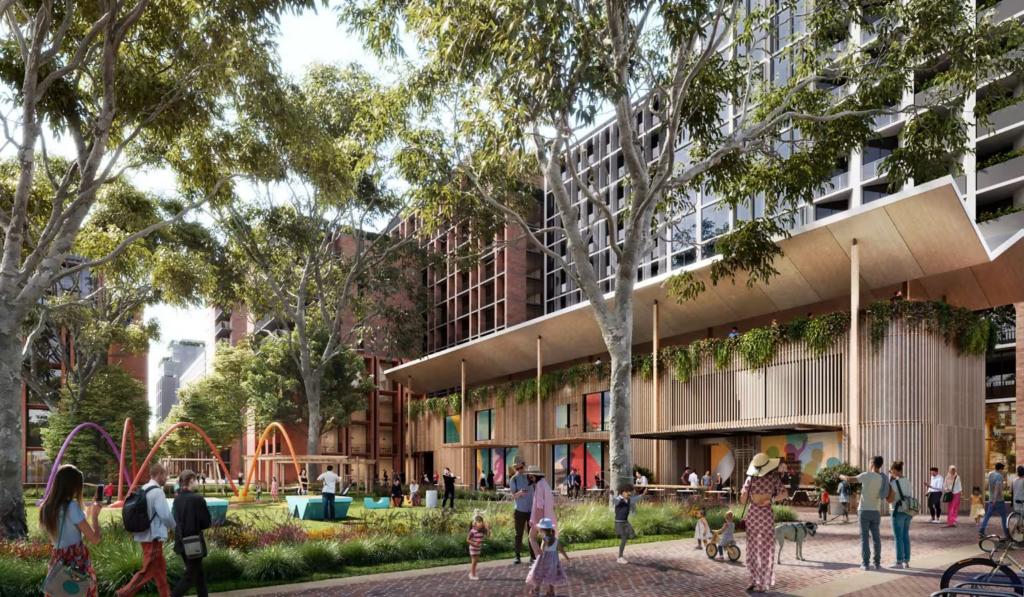
While housing advocates continue to question the dismantling of structurally sound low-rise options during an ongoing housing shortage, Homes NSW maintains that the high-density redevelopment is necessary to deliver modern, energy-efficient housing assets and increase the total net supply of residential dwellings in the inner city.
Protestors and community support networks have indicated they intend to maintain their physical presence at the site as the redevelopment process moves forward. A concurrent rally and press conference were staged at Martin Place to draw wider public attention to the ongoing tenancy disputes.
Independent tenant advocacy and advice regarding legal rights throughout the Waterloo redevelopment process remain available via the Redfern Legal Centre on (02) 9698 7277 or through their online portal.
Published 29-May-2026


